And now look at you; you look like the stars in the night skies. And your God did it!Deuteronomy 10:22
*********************
You see the goodness of God as you gaze into the night sky. When surrounded by the wonders of the universe, you stand in awe of the Maker’s design.
You love to examine the night sky. You are are captivated by the phases of the moon and the marching constellations as they glide across the atmosphere.
It is in this upward glance that you gain perspective. When you look at the sky, the purpose for your earthbound existence become clear.
It excites you to realize that you have been offered a divine destiny by the Creator of the Universe.
As you look at the vast expanse, you are in awe that God calls each star by name. This offers you great comfort, for it reveals how intimately and personally the Creator values what He has made.
It is in this realization that you find security. Your Maker designed you for a specific purpose, and like the stars, you light up when He calls your name.
You should praise him. He is your God. He has done great and wonderful things for you. You have seen them with your own eyes. Deuteronomy 10:21
**********************
You have been called by God and down deep, you have always known it.
Your destiny will involve many different seasons. It will take on a variety of forms as you move through your allotted time on this planet.
Embedded in the foundation of your spiritual core is an interlocking system consisting of a perfect blend of praise and gratitude.
You are grateful for the peace that replaces discord in your thoughts. You remain ever mindful that gratitude and praise are powerful deterrents to discontentment.
Your gratitude for the things God has done for you is revealed by the enthusiastic way you talk about Him.
You love to get together with friends and family who have this same sense of appreciation for the work of God in their own lives as well.
You love to share stories of miracles and mercy. You openly tell of the times that God has showered you with comfort and compassion during times of great difficulty.
You also enjoy hearing others talk about what God is doing in their lives. You adore being surrounded by people who openly express their gratitude for the blessings of God. On the other hand, you find it tedious and exhausting to be around complainers. You know that a very high level of toxicity is contained within a complaint so you combat its effects with the purposeful practice of praise.
As we release our addictions with the words of Jesus, “It is finished!” and settle comfortably into our new normal, we feel gratitude beyond words. The dysfunctions we struggled with in the past are fading in the distance. We are on firm footing and making solid progress.
Sometimes we make really good progress and are pleased with the distance we cover in such a short time. We feel that our relationship with God is in great shape, and we are motivated by our sense of accomplishment.
At other times, however, we feel as if we were trudging through mud, putting one foot in front of the other, lacking any drive or inspiration. We feel inadequate, overwhelmed, and disinterested. During these times, we don’t feel so great about our relationship with God. We assume He is disappointed with our lack of energy and enthusiasm.
These times are rare, but they happen often enough to make us question our stability and resolve. We wonder if one of these periods might last so long that we will just give in and give up.
We don’t want to lose what we have gained, and we don’t want to miss the joy of the journey, so the thought of trudging through the marshy swampland of doubt, discouragement, and disagreement feels very threatening.
We love the mountaintops and the flowery meadows, but we must face the fact that dry deserts and muddy bogs are also part of the expedition. We must make peace with both if we want to get where we are going.
When the roads are easy, we feel joy in looking back to see how far we’ve come. When the roads are difficult, we seem to take one step forward, two steps back. Sometimes we slip and fall. Sometimes we just stand still and shrug. Even when we do finally get on firm footing again and start to move forward, we scold ourselves for not being stronger, more resilient, or more determined.
Our minds were filled with fear, but the fears were not always clearly defined. So, we examined our fears more closely and realized they were rooted in two basic lies.
1. We Were Not Enough
We feared that we weren’t smart or capable enough to maintain our place on this planet. We feared we would not be able to make good enough plans and follow through on them. We feared we would not be able to earn enough money to pay the bills. We feared we could not meet the expectations others had for us, or those we had for ourselves.
We feared that our ‘not-enough-ness’ would be discovered and we would be humiliated. We feared social settings because we were not interesting enough. We feared being forgotten because we just weren’t very remarkable. We feared being abandoned because we just didn’t bring enough to the table.
We feared that we were ill-equipped and woefully inadequate to handle the overwhelming responsibility of life on this planet.
2.We were too much.
We feared that we were too much trouble and not worth the effort. We feared that we were too boring, too impatient, too greedy, too lustful, too resentful, or too lazy.
We feared that we were too insistent on getting our own way. We feared that our sense of entitlement and list of demands were turning us into tyrants.
We feared being alone because sometimes we were too much, even for ourselves.
You formed me inside my mother. You put skin and flesh on me like clothing. You knit me together with bones and muscles.
Job 10:10-11
In a world of competition and comparisons, you sometimes wonder if your value is measured by what you do, rather than by who you are.
This is a concern for many human beings. Some struggle to do more, or to be better in order to feel significant. Others think that money, talent, or fame will make them feel important. Sadly, these endeavors prove to be worthless.
Knowing that you are handmade by the Creator of the universe assures you of your value. Since you are so special to God, He designed you in a unique and wonderful way. Before your mother even knew you existed, God was already weaving together the strands of your DNA.
Imagine His excitement as He selected your eye color, your voice tone, and your sense of humor! He gave you a passion for family, friendship, and community. He infused you with a high level of curiosity and creativity.
He placed within you specific gifts and talents which you are just beginning to discover.Your value is far beyond what you do or say. You are much more important than your achievements or your awards.You are a person with a destiny; designed by the God of the galaxies.
You play an important role in the future of humanity. Each day you spend on this planet becomes a significant part of history.
God knows the value of your unique human spirit. He knows that your heart is filled with compassion, determination, and enthusiasm. He has given you the mind, body, and temperaments which will are ideal for your journey.
Long before anyone knew you, God was sketching out a plan; designing you perfectly for the destiny which will be yours. He chose you as His own, and He has promised to be your God forever.
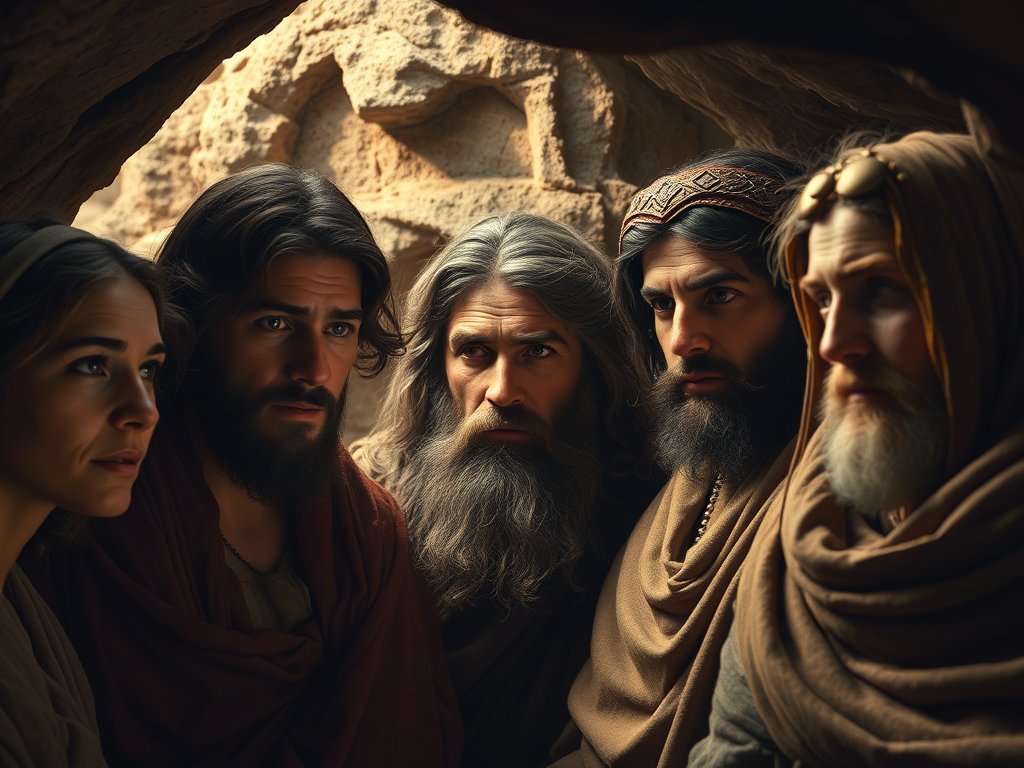
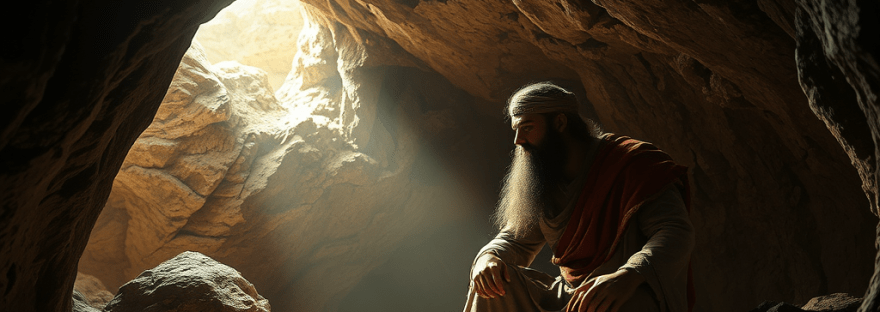
After escaping Crazytown, David finds a cave to hide in, alone (1 Samuel 22). It is a safe place, where he no longer has to answer difficult questions or pretend to be someone he is not. However, his alone time to power down and reboot doesn’t last long. Members of his family hear of his whereabouts and come to join him.
We find that nothing spotlights our dysfunctions quite so vividly as when family shows up to help! Granted, it is a blessing to have family who care enough to show up, but we also know the risk. For those of us, whose tendency is to shut down emotionally when family dynamics are in play, our emotions become glitchy and start to malfunction. We say the wrong thing, blurt out secrets, wear the wrong clothes, belong to the wrong social groups, and vote for the wrong candidate.
It has been said that family is everything. Families can teach us about loyalty, behavior, and self-preservation. They can teach us work ethics and responsibility. Families also teach us how to be manipulative, sarcastic, and selfish. All families have their own layers of drama, chaos, and distrust.
Some families are quite ordinary. Some families are quite extraordinary. All families have dysfunctions, traditions, trauma, and mixed messages.
Family members know too much about each other and the history they all share. Family can push our buttons like no one else. Family can make us feel included or rejected; loved or despised; powerful or weak. Although family dynamics are messy, they are God’s plan for a place to start. Unfortunately, each generation has an ancestry made up of humans, so we all possess some elements of dysfunction within our family code.
_________________
Eventually, David enlists the help of a neighboring king to look after his family so he can heal. We can’t help but notice that this sounds an awful lot like an Al-Anon topic. Family members can be part of the recovery process, but it is not appropriate to become cave dwellers too, just to show their support.
In 1 Samuel 22, we read about David, the would-be king who is making decisions clouded by dysfunction. The story begins with rejection, danger, and drama. David is at risk. He has experienced trauma. He is out of his element, all alone, and without clear direction. His life has come down to a series of geographical moves and his only reason is simple, “I am here because it was not safe there.”
These words ring true for us as well. We have experienced trauma. In response, we run, we tell lies, we act crazy, and in the end, we finally find a cave where we can hide.
We enter our caves carrying something that makes us feel fierce. We carry memories of times when we weren’t so weak. Despite our insecurities and weakness, we also know there is resilience, tenacity, and charisma woven into our DNA by the Creator of the Universe.
In David’s story, he had the sword of Goliath strapped to his side, reminding him of his greatest victory. But, later, after experiencing his own trauma, it seemed his glory days were over. He is hiding in a cave which he refers to as his stronghold. Battling anxiety, depression, and loss, the cave becomes a makeshift fort for David and his absent army. Bringing an abrupt end to his promising career, his entire future has been destroyed by one man. The grief was too much to bear.
The man who once killed a giant with a rock, got hit between the eyes with trauma and it took him to a dark place. Everything changed. Nothing will ever be the same. He is alone. He is unprepared. He is in self-defense mode, and his behavior becomes irrational and unpredictable.
We too have experienced moments of trauma, laying the groundwork for our current dysfunctions. Whether we can remember them or not, each of us has heard, seen, or experienced things that made us feel unsafe, forcing us into unhealthy coping patterns. For some, the trauma was a single event, such as an accident, an illness, or a loss. For others, the trauma came gradually in waves, due to chronic pain, devastating disappointments, years of neglect, indifference, or abuse from a parent or spouse, or the emotional baggage of living in a deeply dysfunctional environment.
Although introspection is important to growth, it is not the main purpose of our spiritual awakening. We are moving into a new position of authority in Christ. We are leveling up. We are no longer human beings having a spiritual awakening. We are awakened spiritual beings affecting the realm of human existence.
Admittedly, human nature can often get in the way, so we frequently ask the Holy Spirit to show us where we need to improve. We ask for help in making the necessary changes. We believe we receive that help and start thanking God for the results even before we see them. We use the words of Christ, “It is finished!” (Tetelestai) to call an end to our obsession over shortcomings and our continual dialogue of negative self-talk.
Empowered by the Spirit of God, and emboldened by the words of Christ, we let go of the things that trip us up. We release our grip on perfectionism. We dismiss the internal committee in our head who sits in judgement of our every motive, thought, behavior, or attitude. We stop auditioning for the lead role and find our proper place in the supporting cast. With the spotlight on Jesus and what He is doing, we take our eyes off ourselves and are relieved of self-consciousness.
So, Moses raised his walking stick toward the sky. And the Lord sent thunder and hail. Lightning flashed down to the earth. Exodus 9:23
**************
Moses’ walking stick was a common tool of the trade for shepherds, but when lifted at the Lord’s command, supernatural power was ignited. In the same manner, you too are called to divine destiny, using the tools of your trade.
Every day, as you perform your regular duties, you are fulfilling your call, and ushering in the power of God. This power brings freedom and deliverance to you as well as your friends, family, and co-workers. The skills and experience you hold as ‘tools of the trade’ in your daily operations are the elements God infuses with divine energy. He is able to show Himself powerfully as you function in your daily tasks.
You often experience overwhelming gratitude to God for being such a loving Creator who takes interest in the struggles and challenges of His children.
You watch as God’s miraculous power is unleashed to bring deliverance and freedom to those who have no voice. You are honored to be a part of it and you are grateful to have been chosen for such an exciting and fulfilling calling.
Everything that we have experienced thus far fits perfectly into our destiny. We can be safe in this moment right here, right now, today. Our transformed nature tells us to live loving, and compassionate toward others. We have a choice in how we live out our days, months, years, and decades in this dimension before we transition into everlasting life. When we choose to live the way Jesus taught, we choose God’s plan for us. If we veer off onto the wrong path, God will redirect us to get us back on the right one.
Each life represents a ministry in itself. Whether you are a stay-at-home mom, a father, a business executive, a seamstress, a farmer, a craftsman, an administrative assistant, a grandparent, or any other personal or professional position, your life is a ministry.
Some of us see it during our careers, yet others have trouble figuring out what their ministry might look like. All of us have a ministry. Maybe it’s ministering to your family. Maybe it is mentoring a young person or a neighbor. Perhaps you are caring for an ailing parent, spouse, friend, or sibling.
As a remodeler, I see where God loves to decorate our lives. God HAS to decorate us by His very nature. While He knows what we have done and where we are going, He continues to guide us, polish us, sand down our rough edges, and make additions that will continue our journey.
Let the Holy Spirit live long enough in a heart and that heart will be transformed. Portraits of hurt are replaced by landscapes of grace. Walls of anger are torn down and crumbling foundations are built up. God can no more leave a life unchanged than a parent can leave their infant’s diaper unchanged.
This could explain some of the discomfort in your life. Remodeling the heart is not always pleasant. We don’t object if a carpenter adds a few shelves, but it can be inconvenient and even painful when the entire kitchen is gutted for a total renovation.
God has such high aspirations for you. He envisions a complete restoration. He won’t stop until He is finished. He wants you to be just like Jesus.