


Waiting on God and being certain of His blessings is not pie-in-the-sky or wishful thinking. This faith choice is not presumptuous or improper. Blessings are the divine energy of God empowering us to succeed because we choose to believe in His goodness. He has equipped us with a divine destiny. He wants to see us succeed as much as we do.
_____________________________
And so, we wait for what God has promised, in the same way we might wait at a bus stop, in eager anticipation. We aren’t sitting at some random corner, hoping a bus might drive by. We are positioned at the right place at the right time, waiting for what we know is on its way. We aren’t waiting to see if a hopeful future will appear. We are waiting with confidence, certain of it.
When our emotional center becomes depleted, it is easy to just shut down and go dark. For some of us, the darkness is called depression, and we struggle with thoughts of self-harm. For some of us, the darkness is shoved aside with distractions. We bury ourselves in work, entertainment, shopping, or anything else that will keep us from dealing with our unmet emotional needs.
These needs keep us running from one relationship to another; one career path to another; one church to another; one substance to another. We play the blame game, accusing our parents, our partners, or our culture. We know we have unmet emotional needs, so we are naturally drawn toward people and situations that promise to meet them. Of course, it is only a matter of time before they fail us. No human can fully meet our deep emotional needs. It is a painful lesson we have to learn time and time again, until we begin to understand what it means to level up.
We must accept the fact that no human being is equipped to completely fulfill another human being’s emotional, spiritual, and psychological needs. It is just not possible. And it is not their fault. To level up, we must set aside our petty resentments about how others have failed us and realize how foolish it was to think that they wouldn’t.
We sometimes struggle in our relationships. We are confident, capable, and intelligent, yet the difficulty of certain interpersonal pressure makes us feel inadequate, insecure, and inferior. We sometimes invest ourselves in human connections but end up feeling depleted and exhausted. When our emotional needs are ignored, we feel short-changed. We need a place to find replenishment when our emotional pool runs dry.
We sometimes invest our emotional energy into relationships that consume us. We invest generously, with hopes of a healthy return, but face bitter disappointment when the dividends are given to another. Even when we invest into a mutually compatible relationship, we may still fail to see any substantial gains to our emotional portfolio.
We feel as if our investments should be growing and gaining in value but unfortunately, our emotional energy just does not replenish itself. Other human beings will not and cannot replenish us. Emotional needs are a problem. They have been a part of our lives, long before we knew what to call them.
Name some unique traits or interests that you remember having when you were younger:
Examples: Unique ideas or inventions, building things, taking things apart, making people laugh, helping friends with homework, caring for pets, etc.
Other Traits: exceptionally sensitive and empathetic, compassionate, attentive to detail, energetic and enthusiastic, strong-willed, etc.
What was the most common use of your imagination when you were young?
For example: Developing new and better ways of doing ordinary tasks, writing stories, creating artwork, playing musical instruments, singing, inventing new games, improving old games, developing team strategies, etc.
Are there unique qualities and talents buried inside you that God is telling you to call back to life?
In the natural realm, we knew that all dead things did not fossilize. Some decomposed and turned into fuel. We realized it was no different in the spirit realm. We had spoken the words of God to our hard hearts and fossilized past. We watched as He brought our dead dreams back to life.
But we were also faced with the dilemma of what to do with the decomposing compost heap of our past, which should never be called back to life? What of the crimes, the addiction, the lost relationships, and wasted years? We certainly didn’t wish to see those carcasses rising up like zombies from the swamp.
Through this conflict, we discovered the significance of fossil fuels. As the hardened skeletal remains were good for a resurrection, the fossil fuel, made from decomposing waste, could be purified, and used as fuel to propel us into our destiny. A criminal history could be transformed into the fuel which would activate a prison ministry. A struggle with addiction and relapse could fuel a new recovery program. A failed relationship could provide the energy for personal growth in matters of romance and respect…
In time, we became willing to enter our own valley of dry bones (Ezekiel 37) to speak life over what had been dead for so long.
We found the lifeless remains of enthusiasm, which had been suffocated by disappointment. We found fossils of unfinished projects, which might have been profound, had we not given up. We unearthed splintered fragments of gifts, talents, and abilities which had become casualties of our own sense of inadequacy.
Rather than viewing the carnage as evidence of a wasted life, we began to see it as dry bones coming back to life. By faith, we saw a powerful future rising up from the wreckage of our past.
In our New Normal, we spoke life over anything which reeked of death. In our New Normal, we commanded our dead dreams to rise up in service to our King. We did not think this was too much to expect, for we had been given the resurrection power of Christ. We had been urged to follow in the footsteps of our Creator, who…
“Gives life to the dead and calls into existence things that don’t yet exist.” (Romans 4:17)
Our New Normal offered many pleasant surprises. Some of our upgrades were unfamiliar, yet welcome. We enjoyed becoming an honorable person. We were delighted to be viewed as trustworthy. We stopped demanding respect and began earning it. We appreciated the new opportunities God sent our way. We looked in amazement at the doors which stood open in front of us. We looked with gratitude at the doors which had closed behind us.
The glaringly obvious issues had been removed with Jesus’ words, “It is finished!” and once we began moving out of our active addiction, much of the chaos connected with our former lifestyle settled down. We looked to the future with hope and knew that God was working out the more subtle issues, one at a time, little by little…
I suffered from anxiety all my life and didn’t know what to call it. I self-medicated with drugs and alcohol, which only made the problem worse. I ended up hitting bottom in the worst way and was facing prison. Thankfully, I didn’t run. I did my time and that is where I met Jesus. I continued progress after my release and recently celebrated 17 years clean and sober.
Since leaving prison, God has placed people in my path who would help me in my journey. One was a doctor who understood addiction and provided me with safe, legal, non-addictive medication that relieved my anxiety. Later, God brought a man into my life who was also in recovery. He had found Jesus and sobriety while incarcerated several years earlier and was currently hosting AA and NA meetings in our local jail. We eventually married and now enjoy a life that is better than we ever imagined possible. We owe all credit to Jesus who gathered up our shattered lives and restored us to sanity.
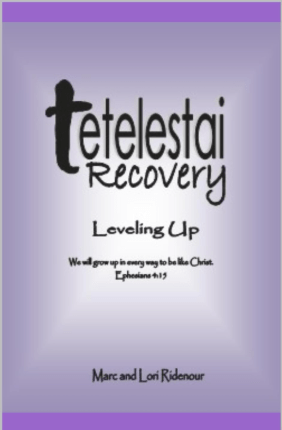
Through our journey and subsequent prison ministry, we wrote the book, Tetelestai Recovery: It is Finished, which details our journey into the freedom and recovery found in the final words of Jesus, “It is finished!”
“The water continued to go down. By the first day of the tenth month the tops of the mountains could be seen.”
(Genesis 8:5)
You are a grateful person who sees logic and organization in the way God sets precise timing for each moment of life.
You do not spend your days lamenting the past, or worrying about the future. Instead, you choose to live in the moment and wait for God’s signal to tell you when the time is right to move forward.
You can see in nature that seasons change according to God’s plan and perfect timing. Seasons of dormancy usher in new growth and seasons of harvest give way to times of rest.
By waiting for God’s guidance, you can rest assured that your progress will be sure and steady. There will be times of waiting. There will be times of forward movement. Each step is scheduled for a specific season in your life which has been prearranged by God.
You do not squander your life away by overwhelming your days with busyness. You enjoy each and every season, knowing that change is constant, and timing is everything.
You observe the stress and pressure on those who view time as an opponent to be overpowered, rather than a friend on which to lean.
You rely heavily on God and His timing to give you guidance and structure. You are relieved that there are times of waiting and preparation because this insures you do not have to take on everything at once.
You realize that some of the seasons of life are like the bitter winds of winter. These days are difficult and hard to endure. Sometimes the waiting is unbearable, but when the time is right, a warm gentle breeze breaks the icy chill and ushers in the colorful array of new growth.
Therefore, you practice gratitude. You know that is what will get you through the difficult seasons when days are dark and minutes pass like hours.
Even though the waiting may seem endless and harsh, you know that if you wait for God to move first, you will always be in the right place at the right time.