At the end of the movie, while still experiencing these physical reactions associated with danger, the lights in the theater would brighten and the audience would stand to leave. Those feelings of tension, which had been so prominent a few minutes earlier, would completely disappear along with its physiological effects.
We were never really in danger, but our feelings responded to sights and sounds from the screen, rather than the truth of reality. Surprisingly, our physical responses quickly corresponded with our feelings, despite the fact that our emotions were based on unrealities.
Tetelestai Recovery – Finding Total Recovery in the Words of Christ, “It is Finished!”
Within the pages of this book you will learn how to move out of your addiction and into your destiny. Through their personal journey of recovery, the authors present indisputable evidence that total healing and release from the disease of addiction can be found through the final declaration of Christ, “It is finished!”
Whether you are a suffering addict; an exhausted 12-stepper; a chronic relapser; or a person who loves one, Tetelestai Recovery will open your eyes to the possibility of permanent sobriety without the struggle. This revolutionary concept is bringing radical changes to the recovery community. You are here for a reason and it’s time to find out why.
As we watch some of our fellow travelers go in a different direction, we fight against anxious thoughts that breed fear and insecurity. We must dismiss feelings of rejection or abandonment, choosing rather to be grateful for the support we received during the times we needed it most.
When Gideon was first called, he struggled with a sense of inadequacy and cowardice. God brought many soldier volunteers to his side, to bolster his courage and boost his confidence. That was their only purpose, and once Gideon was on board and ready, God removed those props, one by one, until only a few remained.
Not every soldier was destined to go into battle with Gideon. And like Gideon, we come to terms with the fact that some of the fellow travelers who join us at various times in our lives will be called away to another mission.
Not everyone can go where we are going. Every believer has their own call to follow. God brings many wonderful people into our lives, at various stages in our journey, to bolster our courage and strengthen our resolve. We are grateful for their support, and we must be gracious if the time comes for them to move on.
As hard as it is for us to believe, we have more power over our thoughts than we ever imagined. We find it is perfectly fine to set a negative thought down. We don’t need to lug it around with us until we make sense of it. We aren’t required to analyze and over-think, searching for some secret solution hiding inside our rapid-fire scatter thoughts. We can just let go and let God.
Unhealthy thoughts are just that. Unhealthy. They can never help us level up. If a thought is not healthy, we can set it down and choose a healthier topic.
As it turns out, our thoughts are a lot like books in a library. If we happen to pick one out that isn’t good, we can just put it back and choose a better one. Using the criteria listed in Philippians 4, while paying particular attention to the instructions following the word finally in verse 8, we can select our thoughts with intention and precision. We don’t need to be saddled with thoughts that hold us down and hold us back.
When comparing our cognitive distortions against the eight descriptive words in Philippians 4:8, we find a way out. With these eight guardrails in place, we can choose which thoughts to keep and which ones to set aside.
Pure
Right
Excellent
Praiseworthy
Lovely
Admirable
Noble
True
Using the acronym, PREPLANT, we can check ourselves regularly throughout the day to make sure the thoughts running through our heads line up with at least one on the list.
If a thought does not meet the criteria, it is deemed unhealthy and carries the potential to make us sick. We cannot level up until we let go of the thoughts that don’t measure up.
When our dark thoughts are triggered, feelings of regret and shame make us cringe. We respond by gathering up our baggage and taking a trip down memory lane. We wrestle with our past and try to rewrite the narrative. We justify, rationalize, and analyze. We surrender to the downward spiral and wonder why we ever believed we could outrun our demons.
After sliding into the abyss of our never-ending regrets, our insides feel hollow, and we become hopelessly despondent. The weight of remorse becomes too heavy to carry. We wonder how we can ever rise above this base line of our worst selves.
These thoughts can snowball and take us under for days. The avalanche of our wrongness buries us in a cold dark tomb of guilt. We are irritable, depressed, angry, and nauseous. We lack motivation and have no sense of purpose. It seems God is so far away, and it is pointless to pray.
To level up, we must develop healthy thought patterns and discipline our minds to stay on a positive track. We can no longer allow our thoughts to wander aimlessly through the minefield of our worst imaginations. We must carve new pathways for our thoughts to travel. We need to keep our thoughts on the high road and pump the brakes when we are headed for the ditch. But how?
One member of the group shared about self-esteem issues that led him into criminal behavior and addiction. From childhood, he had been trying to cope with the confusion of trauma, unaware of what to call it. He struggled with feelings of unworthiness and was unable to feel a sense of value. That all changed when he made the choice to learn about trauma and its effects. He chose to develop a relationship with Jesus, his Healer. He made a choice to forgive and move away from the pain.
Because he says yes to openness, and no to suffering in silence, he now operates in a position of influence and serves as an advocate for others. He has the wisdom of God and the heart of a servant.
Another member shared about his past life of uncontrollable rage that resulted in murder. He spoke about feeling as if he had no choice when it overtook him. His experience with rage was like driving on a slippery, muddy road at full speed, headed straight for the ditch, and unable to stop.
It was hard for us to believe he had ever struggled with rage. This is a man who carries the joy of the Lord on his face. His smile is contagious, his demeanor is humble, and he radiates positive energy whenever he walks into the room. He often speaks of love and forgiveness as if it is his lifeline. He makes a conscious decision to forgive whenever he is wronged. He refuses to carry a grudge, but instead, chooses to walk in love. He says no to rage and yes to compassion. Forgiveness and joy are no longer second nature to him; they are his new normal.
When caught up in a moment of testing, we must resist letting our feelings and circumstances serve as a litmus test of our faith. It is not healthy, nor is it accurate.
Tests are for the express purpose of developing patience. Whether the tests come from internal or external forces, they have a purpose. Some of the tests we face are due to our own weaknesses and might easily become our demise, but even then, God always has a better plan. Any test that activates patience is beneficial. Guilt and blame serve no purpose.
Patience tells us that tests are only temporary. Patience tells us that God is doing a good work in us, and He will complete it. Patience tells us not to judge our walk by one random stumble. Patience keeps us steady as we wait for the storm to pass.
It is patience that we lack when we throw up our hands and give up. It is patience that we lack when we question our progress. It is patience that will get us to the finish line. It is patience that will help us be gentle with ourselves.
As we release our addictions with the words of Jesus, “It is finished!” and settle comfortably into our new normal, we feel gratitude beyond words. The dysfunctions we struggled with in the past are fading in the distance. We are on firm footing and making solid progress.
Sometimes we make really good progress and are pleased with the distance we cover in such a short time. We feel that our relationship with God is in great shape, and we are motivated by our sense of accomplishment.
At other times, however, we feel as if we were trudging through mud, putting one foot in front of the other, lacking any drive or inspiration. We feel inadequate, overwhelmed, and disinterested. During these times, we don’t feel so great about our relationship with God. We assume He is disappointed with our lack of energy and enthusiasm.
These times are rare, but they happen often enough to make us question our stability and resolve. We wonder if one of these periods might last so long that we will just give in and give up.
We don’t want to lose what we have gained, and we don’t want to miss the joy of the journey, so the thought of trudging through the marshy swampland of doubt, discouragement, and disagreement feels very threatening.
We love the mountaintops and the flowery meadows, but we must face the fact that dry deserts and muddy bogs are also part of the expedition. We must make peace with both if we want to get where we are going.
When the roads are easy, we feel joy in looking back to see how far we’ve come. When the roads are difficult, we seem to take one step forward, two steps back. Sometimes we slip and fall. Sometimes we just stand still and shrug. Even when we do finally get on firm footing again and start to move forward, we scold ourselves for not being stronger, more resilient, or more determined.
We often have the best of intentions to love wholeheartedly and unconditionally. But our plans can quickly get lost in a swirling sea of resentment, when we suspect our kindness has been mistaken for weakness. We recoil whenever we give an inch only to be met with demands for a mile.
When we pull away from relationships because the emotional cost is too great, we feel like a bad person. We want to follow the leadership of Jesus. We want to be the kind of person who turns the other cheek and goes the extra mile. But being that person takes its toll on our sense of well-being. Our trust turns into suspicion. Our self-sacrifice turns into self-defense and self-preservation. We become discouraged and frustrated. Our personal investments don’t always pay off and it seems pointless to throw any more emotional currency toward relationships that are bankrupting us.
With our emotional center depleted, it is easy to just shut down and go dark. For some of us, the darkness is called depression, and we struggle with thoughts of self-harm. For some of us, the darkness is shoved aside with distractions. We bury ourselves in work, entertainment, shopping, or anything else that will keep us from dealing with our unmet emotional needs.



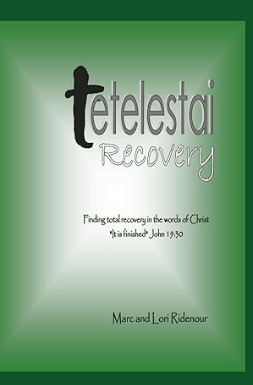







 Finding Total Recovery in the Words of Christ, "It is Finished!"