
Tetelestai Recovery

On A Mission

Knowing that God speaks to His children in all sorts of unique ways, we suddenly recognized His voice speaking to us from the creativity of writers and actors on our television screen. We identified with the heroes. We saw ourselves playing the role assigned to us by the God of the Galaxies. We became aware in a way unlike ever before that we were on a mission which would influence millions, change the course of history, and create spiritual wavelengths which would echo into the centuries to come.

Excited by the prospect of finding our true purpose, we searched for clues. We prayed for wisdom and guidance. We searched the sacred text of our Bibles and studied the writings of many and watched for attributes to immerge which would reveal our divine destiny. We took personality and spiritual gift tests to narrow the scope. Eventually, we had enough clues to piece the puzzle together, and our spirits soared with great enthusiasm. We looked back over our life and realized that the destiny had been there all along and every step of the journey was preparation for the main event.

But still we questioned whether we could actually fulfill our mission. We knew our impulsive nature had caused us to make some terribly bad choices in the past, so we wondered if this was God’s call or just a delusion of grandeur. The thought of God calling us to something of eternal magnitude seemed a little ridiculous and really crazy.

We had to question whether our passionate reaction to the prospect of hearing this divine call was our love for Him or our own search for significance?  Maybe it was both. And maybe that was okay.

Was it presumptuous to think that the God of the Universe had hand selected us to do something special for Him?

  • Was it ego…or was it faith?
  • Would we really be able to participate in bringing the Kingdom to earth?
  • Were we truly able to alter the course of history?

Our skeptical voices questioned, “Why would God call me?”

Our awakened spirits responded, “Why not me?”

Chapter 13, The Next Right Thing https://a.co/d/i0rjHBr

Tetelestai Recovery

The Next Right Thing

If we were to replicate an artistic masterpiece, for example, Michelangelo’s sculpture David where would we begin? A block of granite would be a good start, but after that, what next? A chisel in one hand and a hammer in the other, then tap, tap, tap away. It seems there should be no concern over the shape of the nose until the face has begun to take form. An artist would not frustrate himself over an earlobe’s curve if the nape of the neck has yet to be established.

It is one thing for a sculptor to envision his finished project. It is quite another thing, to plan for every tap, every move, and every chip. The first is art. The latter is insanity.

And so, we were given only one instruction at a time. God didn’t show us how to take the next 53 steps of our journey. He simply showed us one first, and then the next, and the next, and the next. He knew that we had a tendency to run out ahead of Him and wander off. Therefore, He gently kept us at His side, giving us only one instruction at a time. He knew that one simple stumble could place us into the path of the enemy, so His hand held us close. To counteract the enemy’s offensive moves, His plan had to remain flexible and changeable. Therefore, if He gave us the entire game plan, we might have run ahead and walked into a trap or missed His unexpected strategic maneuvers.

Therefore, we encouraged ourselves and each other with the simple mantra: Do the next right thing. That’s it, that’s all. God never asks us to make a five-year plan, complete with bar graphs and pie charts. He merely asks us to place one foot in front of the other, holding tight to His hand.

One step at a time, taking care not to run ahead, we found that God’s direction for us wasn’t always religious in nature, nor did every event seem extraordinarily significant. But as our journey continued, we realized that each right thing led us to the next right thing. And in this realm of just one thing, the next right thing, we found balance in our walk and harmony with ourselves.

Chapter 13, The Next Right Thing https://a.co/d/deLSbDM

A Date With Destiny

The Power of Wisdom

Wisdom is better than weapons of war. Ecclesiastes 9:18

****************

Holding a position of authority, you use the wisdom of God to fight fearlessly against negative influences. You stand in opposition to the ills of society which appear in the form of racism, injustice, and inequality.

Working in collaboration with the Creator of the Universe has given you great wisdom. Because of this, you are often called upon to mediate controversial disputes and restore a proper balance of power within an organization, a community, or a committee. 

Although these encounters may seem antagonistic at first, you understand that fear is usually at the root of each conflict.

Tapping into your intimate connection with the Creator, you use wisdom to identify the unspoken fears and establish healthy boundaries where everyone feels safe and heard.

You are a good person living in a very hostile time.

Knowing that it is the wisdom of God that protects you from evil schemes, you remain in a position of safety and security.

You know that all the forces of darkness cannot overpower the Creator of the Light.  And in His light, you are always safe. No matter how brutal or relentless the battles may seem, you are sure that victory will always come.

You are fighting the good fight and remain sheltered in the safety of God’s wisdom and power.

A Date With Destiny – September 18 https://a.co/d/8cwBWT8

Tetelestai Recovery

Living Water

For I know the plans I have for you,” declares the Lord, “plans to prosper you and not to harm you, plans to give you hope and a future. Jeremiah 29:11

***********

The truth of God’s word is unchangeable and lasts forever. What He says remains in effect for anyone who chooses to believe it.

If He promises us hope and a future, and we choose to believe this for ourselves, we can live in eager anticipation that His word is being fulfilled in our lives. We can build our lives around the fact that we have hope and a future. It is the solid rock upon which we construct our goals and visions.

Yet we also wonder, “If God’s word is true, why are there people living without hope? Why wouldn’t His promise apply to everyone across the board?’

The answer is deeply complex. The reason God’s promises are not fulfilled is because His words rely on the recipient laying claim to them. These fantastic promises of God are often hard to believe for ourselves. Sure, we believe God is good, but we also know that we aren’t. We believe He does great things for good people, but it seems a bit presumptuous to expect the same blessings as someone who was busy doing great things for God while we were selfishly making a mess of our lives. We know the Bible talks about penalties for bad behavior, so it seems that if we believe in the blessings, we must also fear the curses.

That may have been a valid statement before the cross. But we live under Grace, not Law. Jesus broke the power of the curse, so we can all live in the blessing if we choose to believe it. We need not fear the curse or the consequences of our own mistakes. Those issues have been resolved. We are in a continual state of cleansing, like standing beneath a waterfall. Even a sin committed one second ago, is already washed away in the living water. We live exclusively in the blessings and enjoy firm standing on the promises. Curses do not cling to us. Blessings chase us down.

Chapter 3, The Waiting https://a.co/d/iyyLSMU

Tetelestai Recovery

How Much Is Enough?

In all honesty, we knew that God, in His infinite wisdom, would never give us more wealth than we were spiritually mature enough to handle. But we also knew that the devil was crafty and if he could keep our focus on money, whether too much or not enough, we could remain distracted from our destiny and thus, make his job a lot easier. Looking back, we saw that when we pursued our own financial security, it put God in a very precarious position. He wanted us to have a sense of security, but not so much that we became independent of Him.

Jesus Himself taught us to pray, “Give us today our daily bread,” showing that our Father welcomes us to ask for what we need, when we need it. We do not have to beg or plead; nor do we need to hoard or steal.

In the book of Exodus, manna was provided in the wilderness on a day-by-day basis. Gathering ahead of time was pointless because it wouldn’t keep overnight. God knew that humans were hoarders by nature. Not much has changed since then. We are still prone to squirreling away our supplies just in case God fails to come through for us in the future. We inventory our supplies and check our bank balance whenever we feel insecure. When we suffer loss, we feel powerless. When we see an increase, we feel powerful, yet more insecure than ever.

Much like the other pursuits we struggled with, such as drugs, alcohol, sex, perfectionism, popularity, and many others, we had trouble finding a point at which we could say, “This is enough, I am completely satisfied and content. I do not need any more.”

Tetelestai Recovery 2 – Our New Normal https://a.co/d/5RV2z8z

Tetelestai Recovery

A New Brag

Paul had a messenger of Satan he referred to as a thorn in the flesh. He realized it was to keep him from becoming conceited, but still he asked God to remove it. He asked three times and each time, God told him His grace was sufficient. On that third ask, Paul finally realized there was a higher purpose for the thorn.

He was quite the achiever. He was a writer, and activist, a preacher, and the recipient of divine revelation. Those are some heady titles. Anyone in his position would struggle with arrogance.

Before his conversion, Paul had been a well-educated, well-connected, influential person. Perhaps he had an ego problem all his life. He was ambitious about his political career and eager to gain social standing by stopping the Christian movement. As a Roman citizen, educated in the Pharisaical law, he could advance his political pursuits in the eyes of the religious leaders while also remaining a loyalist to the Roman government. Snuffing out the Jesus movement would have brought him the promotion and respect he deserved.

But as he sat in a prison cell, frustrated with a messenger of Satan, he couldn’t think of anything he’d like more that to have God take it away.

We wonder if this messenger of Satan was one of the guards at the prison. Maybe they had worked together when Paul was a Christian bounty hunter, and the guard was now taunting him about being ‘one of them’. Perhaps the messenger of Satan was another prisoner. Perhaps the thorn was a conspiracy theory that Paul was a double agent, and the Damascus conversion was a clever lie to get the early Christians to trust him so he could infiltrate their secret communities and advance his political career.

No matter who or what his thorn in the flesh was, it caused Paul a great deal of distress. But God said, “My grace is sufficient. It is made perfect in your weakness.”

So, the guy who was prone to conceit found a new brag. He would brag about his own weakness so the grace of Christ could be the driving force behind all he would accomplish. It was hard on his ego, but good for his soul.

…Continue reading https://a.co/d/hH2bXok

Tetelestai Recovery

It’s a Choice

Considering whether or not God can actually forget our sins, leaves us with two important theological questions:

  • If God can forget things, then how can He be all knowing?
  • If God can’t forget things, then how can He say that He remembers our sins no more?

Forgiveness is extremely difficult for us, so we assume that it must be even worse for God because he is all present, all powerful, and all-knowing.

In our human relationships, we like to believe that the people we have wronged will gradually forget about it over time. But with God, we know that’s not an option because He exists outside of time. There is no movement of time in the spirit realm. He is everything, everywhere, all at once.

So, we have to ask ourselves, “How can God say that He forgives us and remembers our sins no more?” The answer is simple: He chooses not to remember.

Because He is God, he can make choices that are outside the bounds of human ability. With the attribute of omnipotence (all powerful), He can make the choice not to remember.

In Isaiah 43:25, God says, “I will not remember your sins.”

In Jeremiah 31: 34, “I will forgive their iniquity, and their sin I will remember no more.”

Hebrews 8: 12 and Hebrews 10:17, “Their sins and their lawless deeds I will remember no more.”

There is nothing to indicate God absentmindedly forgets, as if He suffers from dementia or it just slips His mind. Rather, in His infinite mercy, He chooses not to remember the wrongs that He has forgiven. Therefore, we conclude that surface level theology says, “God forgets,” while leveled-up theology says, “He chooses not to remember.”

Continue Reading https://a.co/d/et0BASS

Tetelestai Recovery

It’s Okay to Be Human

He didn’t condemn them for being distracted by their growling stomachs. He didn’t belittle them for showing signs of weakness. He didn’t minimize their hunger by comparing it to His own when He fasted for forty days. It wasn’t His desire to see them suffer to prove their devotion.

Continue Reading https://a.co/d/7AFtNaA

In the multiplication miracle of feeding the five thousand, we see that Jesus was happy to give the hungry people as much food as they wanted. They ate until they were satisfied, and there was plenty left over.

By this example, we can rest assured that Jesus is pleased when He is given the opportunity to be generous. He is not stingy or miserly when it comes to providing the necessities of life. He will not withhold the resources needed to fulfill our destinies. We know that He wants us to have everything we need to successfully complete our human journey. However, there are times we may feel uncomfortable asking, for fear our requests might be based upon selfish motives.

As we level up, we learn this is a needless fear. God is a loving Father. He will not give us something that is bad for us. We think back to the days when our children were young, and they asked for candy when it was time for dinner. We didn’t judge or condemn them. We simply said, “No. That’s not good for you,” and then provided them with a healthy option instead. We know that God will do the same for us. He won’t give us anything that will do harm. We trust Him to protect us; sometimes even from ourselves.

We see that during His mission on earth, Jesus never scolded anyone for asking too much or too often. In fact, He stated time and time again, “Just ask. I want to give you what you need. ”

The feeding of the five thousand demonstrated the Father’s heart through the acts and attitudes of His Son. Jesus had compassion on the famished crowd.

He didn’t condemn them for being distracted by their growling stomachs. He didn’t belittle them for showing signs of weakness. He didn’t minimize their hunger by comparing it to His own when He fasted for forty days. It wasn’t His desire to see them suffer to prove their devotion.

They were hungry and He wanted them to be fed. Jesus met their needs abundantly. He provided more than enough. There may have been some who gave up and left early before the miracle arrived. This may account for the enormous number of leftovers His disciples collected after everyone was fed.

We realize it is critically important that we never become one who wanders away, feeling the pressure to fend for ourselves, rather than waiting to see what Jesus is doing.

We know there will be times of waiting. And during those times, we might not have a clear view of what is happening, or how the miracle will unfold, but waiting is part of the process, and we must become willing to put in the time. Knowing Jesus like we do, we can be sure that compassion is His first response.

Tetelestai Recovery

Dark Days

https://a.co/d/g67wFqj Chapter 9: Hold That Thought

The trajectory of our future is altered by our thoughts when we base them on the perceived realities that swirl around in our brains unchecked. We may hate our pessimism and suspicion, but we can’t break out of the cycle. We may despise our long dreary days of dark thought spirals, but we can’t seem to stop them once they start.

We think about what people were saying about us behind our backs. We wonder if they really wish we weren’t around. We suspect we are going to be fired, dumped, rejected, or abandoned. We replay old conversations, trying to read between the lines so we can better prepare for a number of worst-case scenarios that are likely to befall us.

It has been said that a coward dies a thousand times, a brave man, only once.

***********

Our thoughts create the reality we live in, whether they align with the truth or not.

To level up, we must develop healthy thought patterns and discipline our minds to stay on a positive track. We can no longer allow our thoughts to wander aimlessly through the minefield of our worst imaginations. We must carve new pathways for our thoughts to travel. We need to keep our thoughts on the high road and pump the brakes when we are headed for the ditch. But how?

Continue Reading: https://a.co/d/g67wFqj

Tetelestai Recovery

Word Caves

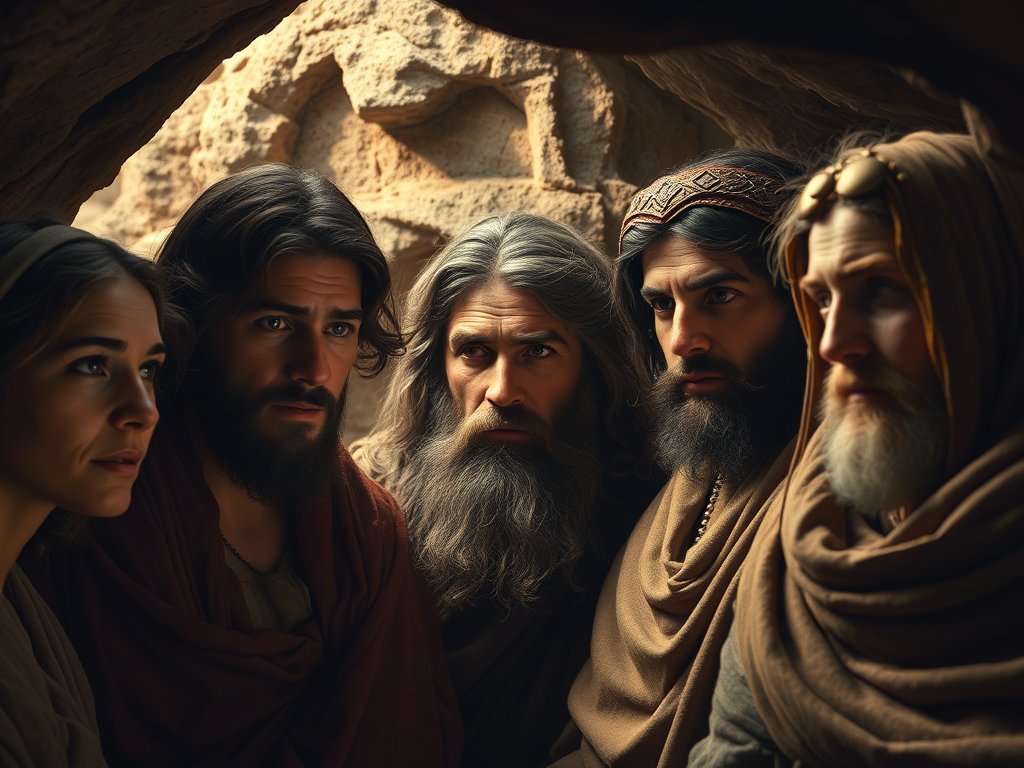
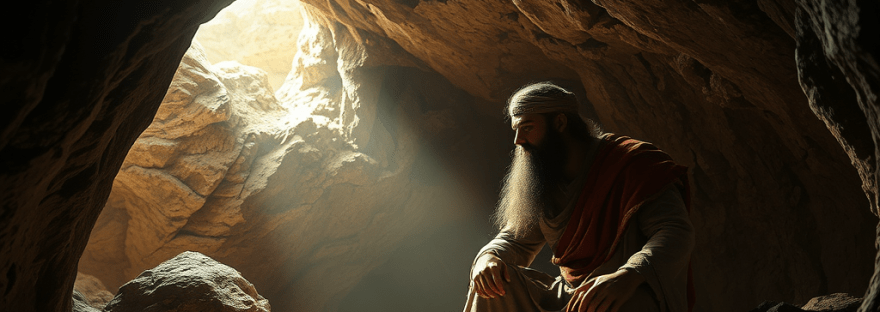
Some of us are isolated in self-fulfilling word caves:

  • “I will never be like my mother/father/sibling!”
  • “No one is going to tell me what to do!”
  • “Once and addict, always an addict.”
  • “I will never allow anyone to get close to me again!”
  • “I can’t trust anyone but myself.”

Sadly, we lose our identity in these word-caves because they only define us by the negative; what we won’t do. The words never define us by our positive traits or what we can be. Our personalities form around our resistance, which prevents us from developing a sense of self and cultivating our gifts, talents, and abilities. We lead a reactionary life, in knee-jerk mode. Our light is dimmed by the darkness of our own words.

Living in these caves leaves us dull and lethargic. We search for an identity. We become chameleons and mimic the personalities of those we find likeable or interesting. The fit is never quite right, and we rarely feel truly authentic.

The word cave, ‘No one is going to tell me what to do!’ creates a rebellious monster within us. It roars with rage around authority figures and pushy people.

The word cave, ‘I will never let anyone get close to me again!’ is a self-sabotaging prophecy. Keeping people at arm’s length keeps us safe from the risk of heartbreak, but it also keeps us imprisoned in solitude. In time, loneliness transitions into self-pity, and we no longer have to push people away. No one wants to get close.

Many of us hide in the caves of addiction, alcoholism, co-dependence, idealism, lies, promiscuity, and even perfectionism. These caves may have been where we ran to hide at one time in our lives, but they are not healthy places to be. Eventually, these caves become prisons. The fortress where we hide becomes the stronghold of the enemy to keep us from fulfilling our divine destiny.

Continue reading: https://a.co/d/cSmTFs1