
We know that our emotions can be a powerful force that affects us, body, mind, and soul. We also know that Jesus has made a way to escape being controlled by our feelings, which can range from pesky to obsessive or even frightening. We are told in the Word that we have been made the righteousness of God in Christ. This flies in the face of feelings which indicate something is wrong with us. Our feelings are no match for the Word of God. If the Creator of the universe says we are righteous, then our emotions have no right to dispute it.
We have been made right by the blood of Christ which was donated as a divine transfusion to heal us from the inside out. The emotions we feel, the sounds we hear, the words we say, and the images we see, must all defer to the words of our King who has decreed ‘tetelestai‘ (it is finished) over all that is wrong with us.
At the end of the movie, while still experiencing these physical reactions associated with danger, the lights in the theater would brighten and the audience would stand to leave. Those feelings of tension, which had been so prominent a few minutes earlier, would completely disappear along with its physiological effects.
We were never really in danger, but our feelings responded to sights and sounds from the screen, rather than the truth of reality. Surprisingly, our physical responses quickly corresponded with our feelings, despite the fact that our emotions were based on unrealities.
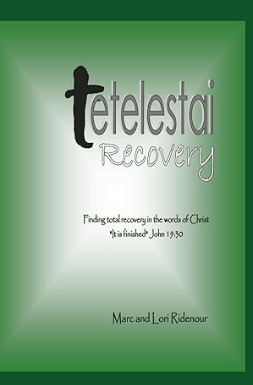
Tetelestai Recovery – Finding Total Recovery in the Words of Christ, “It is Finished!”
Within the pages of this book you will learn how to move out of your addiction and into your destiny. Through their personal journey of recovery, the authors present indisputable evidence that total healing and release from the disease of addiction can be found through the final declaration of Christ, “It is finished!”
Whether you are a suffering addict; an exhausted 12-stepper; a chronic relapser; or a person who loves one, Tetelestai Recovery will open your eyes to the possibility of permanent sobriety without the struggle. This revolutionary concept is bringing radical changes to the recovery community. You are here for a reason and it’s time to find out why.
As hard as it is for us to believe, we have more power over our thoughts than we ever imagined. We find it is perfectly fine to set a negative thought down. We don’t need to lug it around with us until we make sense of it. We aren’t required to analyze and over-think, searching for some secret solution hiding inside our rapid-fire scatter thoughts. We can just let go and let God.
Unhealthy thoughts are just that. Unhealthy. They can never help us level up. If a thought is not healthy, we can set it down and choose a healthier topic.
As it turns out, our thoughts are a lot like books in a library. If we happen to pick one out that isn’t good, we can just put it back and choose a better one. Using the criteria listed in Philippians 4, while paying particular attention to the instructions following the word finally in verse 8, we can select our thoughts with intention and precision. We don’t need to be saddled with thoughts that hold us down and hold us back.
When comparing our cognitive distortions against the eight descriptive words in Philippians 4:8, we find a way out. With these eight guardrails in place, we can choose which thoughts to keep and which ones to set aside.
Pure
Right
Excellent
Praiseworthy
Lovely
Admirable
Noble
True
Using the acronym, PREPLANT, we can check ourselves regularly throughout the day to make sure the thoughts running through our heads line up with at least one on the list.
If a thought does not meet the criteria, it is deemed unhealthy and carries the potential to make us sick. We cannot level up until we let go of the thoughts that don’t measure up.
When our dark thoughts are triggered, feelings of regret and shame make us cringe. We respond by gathering up our baggage and taking a trip down memory lane. We wrestle with our past and try to rewrite the narrative. We justify, rationalize, and analyze. We surrender to the downward spiral and wonder why we ever believed we could outrun our demons.
After sliding into the abyss of our never-ending regrets, our insides feel hollow, and we become hopelessly despondent. The weight of remorse becomes too heavy to carry. We wonder how we can ever rise above this base line of our worst selves.
These thoughts can snowball and take us under for days. The avalanche of our wrongness buries us in a cold dark tomb of guilt. We are irritable, depressed, angry, and nauseous. We lack motivation and have no sense of purpose. It seems God is so far away, and it is pointless to pray.
To level up, we must develop healthy thought patterns and discipline our minds to stay on a positive track. We can no longer allow our thoughts to wander aimlessly through the minefield of our worst imaginations. We must carve new pathways for our thoughts to travel. We need to keep our thoughts on the high road and pump the brakes when we are headed for the ditch. But how?
When caught up in a moment of testing, we must resist letting our feelings and circumstances serve as a litmus test of our faith. It is not healthy, nor is it accurate.
Tests are for the express purpose of developing patience. Whether the tests come from internal or external forces, they have a purpose. Some of the tests we face are due to our own weaknesses and might easily become our demise, but even then, God always has a better plan. Any test that activates patience is beneficial. Guilt and blame serve no purpose.
Patience tells us that tests are only temporary. Patience tells us that God is doing a good work in us, and He will complete it. Patience tells us not to judge our walk by one random stumble. Patience keeps us steady as we wait for the storm to pass.
It is patience that we lack when we throw up our hands and give up. It is patience that we lack when we question our progress. It is patience that will get us to the finish line. It is patience that will help us be gentle with ourselves.
As we release our addictions with the words of Jesus, “It is finished!” and settle comfortably into our new normal, we feel gratitude beyond words. The dysfunctions we struggled with in the past are fading in the distance. We are on firm footing and making solid progress.
Sometimes we make really good progress and are pleased with the distance we cover in such a short time. We feel that our relationship with God is in great shape, and we are motivated by our sense of accomplishment.
At other times, however, we feel as if we were trudging through mud, putting one foot in front of the other, lacking any drive or inspiration. We feel inadequate, overwhelmed, and disinterested. During these times, we don’t feel so great about our relationship with God. We assume He is disappointed with our lack of energy and enthusiasm.
These times are rare, but they happen often enough to make us question our stability and resolve. We wonder if one of these periods might last so long that we will just give in and give up.
We don’t want to lose what we have gained, and we don’t want to miss the joy of the journey, so the thought of trudging through the marshy swampland of doubt, discouragement, and disagreement feels very threatening.
We love the mountaintops and the flowery meadows, but we must face the fact that dry deserts and muddy bogs are also part of the expedition. We must make peace with both if we want to get where we are going.
When the roads are easy, we feel joy in looking back to see how far we’ve come. When the roads are difficult, we seem to take one step forward, two steps back. Sometimes we slip and fall. Sometimes we just stand still and shrug. Even when we do finally get on firm footing again and start to move forward, we scold ourselves for not being stronger, more resilient, or more determined.
Our minds were filled with fear, but the fears were not always clearly defined. So, we examined our fears more closely and realized they were rooted in two basic lies.
1. We Were Not Enough
We feared that we weren’t smart or capable enough to maintain our place on this planet. We feared we would not be able to make good enough plans and follow through on them. We feared we would not be able to earn enough money to pay the bills. We feared we could not meet the expectations others had for us, or those we had for ourselves.
We feared that our ‘not-enough-ness’ would be discovered and we would be humiliated. We feared social settings because we were not interesting enough. We feared being forgotten because we just weren’t very remarkable. We feared being abandoned because we just didn’t bring enough to the table.
We feared that we were ill-equipped and woefully inadequate to handle the overwhelming responsibility of life on this planet.
2.We were too much.
We feared that we were too much trouble and not worth the effort. We feared that we were too boring, too impatient, too greedy, too lustful, too resentful, or too lazy.
We feared that we were too insistent on getting our own way. We feared that our sense of entitlement and list of demands were turning us into tyrants.
We feared being alone because sometimes we were too much, even for ourselves.
I was plagued by the demon of addiction. It made do and say crazy things. I hurt those I loved. Addiction made me depressed, unreliable, and unreasonable. I now know that the demon of addiction is a shapeshifter and never wants to be exposed for its true identity. My opioid prescriptions were as addictive as any street drug, if not more so. Still, I considered myself immune to the label addict, preferring to call my drug of choice, medication.
Pain pills after a back injury made me feel the way I’d always wanted to feel. The opioids triggered a reaction in my brain and slowly, like a dimmer switch, my mind lost its luster. I failed to recognize how lifeless and dull it had become as I moved through my days in a flurry of activity, struggling to prove that I was not the person I had become. I became disoriented in the darkness for many years, and I lost all hope that it might be possible to get free. I believed my pain would be unbearable if I ever stopped taking the pills. It was a deceitful lie straight from the pit and one that wreaked havoc on everything and everyone in my path.
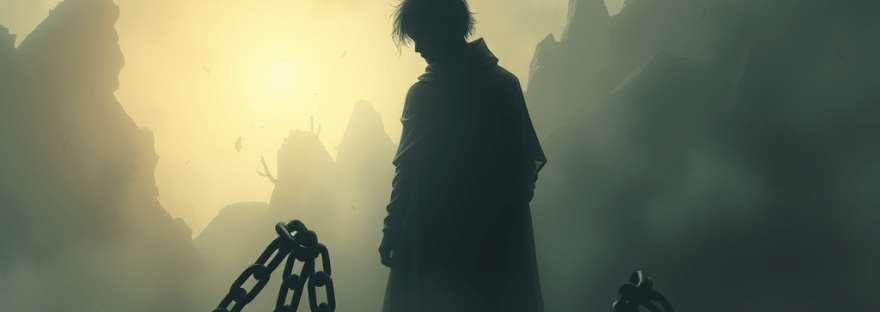
I needed help. I needed hope. I needed healing and deliverance from a dark captor who refused to release me. I needed someone to stand in the gap and believe for me, because I had lost even a spark of faith to believe for myself.
Through a catastrophic chain of events, in the very lowest point of my life, I met some brave believers who stood in the gap for me with their own faith; just like the father did for his son in Mark 9:18-27. Any flicker of faith I may have possessed before that time had been snuffed out and I was lost in the darkness. These kind souls came to me in my despair and showed me the light of Christ’s love. From the illumination of their light, I began to see Jesus in a way I had never seen before. He appeared as my healer, my deliverer, and most importantly, my rescuer. He accepted me in my fallen position and still loved me, despite who I had become.
Tetelestai Recovery 1: It is Finished, Chapter 14 The Breakthrough https://a.co/d/gqrG8QF