A Date With Destiny

Praise

You should praise him. He is your God. He has done great and wonderful things for you. You have seen them with your own eyes. Deuteronomy 10:21

**********************

You have been called by God and down deep, you have always known it.

Your destiny will involve many different seasons. It will take on a variety of forms as you move through your allotted time on this planet.

Embedded in the foundation of your spiritual core is an interlocking system consisting of a perfect blend of praise and gratitude.

You are grateful for the peace that replaces discord in your thoughts. You remain ever mindful that gratitude and praise are powerful deterrents to discontentment.

Your gratitude for the things God has done for you is revealed by the enthusiastic way you talk about Him.

You love to get together with friends and family who have this same sense of appreciation for the work of God in their own lives as well.

You love to share stories of miracles and mercy. You openly tell of the times that God has showered you with comfort and compassion during times of great difficulty.

You also enjoy hearing others talk about what God is doing in their lives. You adore being surrounded by people who openly express their gratitude for the blessings of God. On the other hand, you find it tedious and exhausting to be around complainers. You know that a very high level of toxicity is contained within a complaint so you combat its effects with the purposeful practice of praise.

A Date With Destiny

Spokesperson

Matthew 10:20

It will not really be you speaking. The Spirit of God will be speaking through you.

*************

You are called to be the voice of Christ to some of God’s lost children who don’t seem to be able to hear Him for themselves. When you speak of God’s love and forgiveness, it is the Spirit of God speaking through you, infusing the atmosphere with hope and life.

There are specific souls you will be drawn to. This is a nudge from the Holy Spirit.

Due to your own life experiences and unique character qualities, the connections you make with those who are struggling will prove to alter their lives as well as your own.  You will be the one to help them find their way to the Father, and thus, find their way home.

As a representative of redemption, you find that the chosen ones are typically the most broken ones.

Your ability to connect with  troubled people in a non-judgmental approach makes you the ideal candidate to bring God’s message to those who cannot hear His voice for themselves.

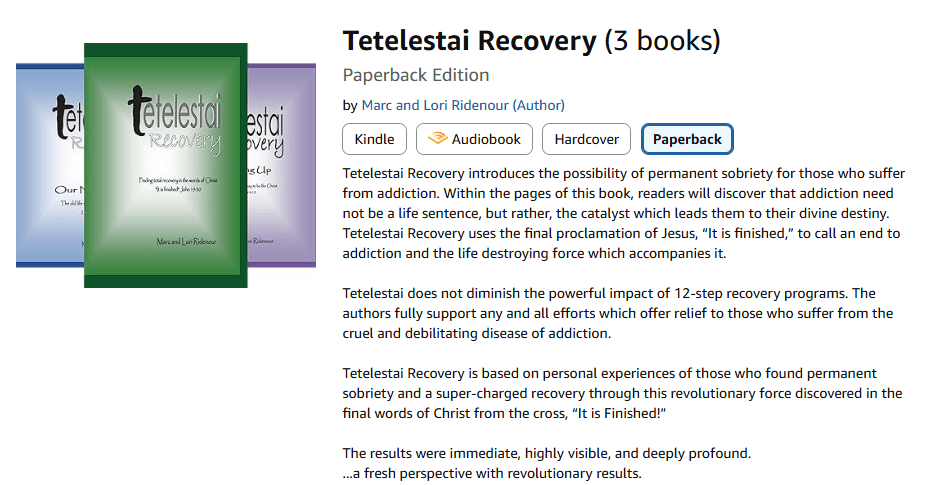
Tetelestai Recovery

Testing Time

When caught up in a moment of testing, we must resist letting our feelings and circumstances serve as a litmus test of our faith. It is not healthy, nor is it accurate.

Tests are for the express purpose of developing patience. Whether the tests come from internal or external forces, they have a purpose. Some of the tests we face are due to our own weaknesses and might easily become our demise, but even then, God always has a better plan. Any test that activates patience is beneficial. Guilt and blame serve no purpose.

Patience tells us that tests are only temporary. Patience tells us that God is doing a good work in us, and He will complete it. Patience tells us not to judge our walk by one random stumble. Patience keeps us steady as we wait for the storm to pass.

It is patience that we lack when we throw up our hands and give up. It is patience that we lack when we question our progress. It is patience that will get us to the finish line. It is patience that will help us be gentle with ourselves.

Tetelestai Recovery

Good Intentions

We often have the best of intentions to love wholeheartedly and unconditionally. But our plans can quickly get lost in a swirling sea of resentment, when we suspect our kindness has been mistaken for weakness. We recoil whenever we give an inch only to be met with demands for a mile.

When we pull away from relationships because the emotional cost is too great, we feel like a bad person. We want to follow the leadership of Jesus. We want to be the kind of person who turns the other cheek and goes the extra mile. But being that person takes its toll on our sense of well-being. Our trust turns into suspicion. Our self-sacrifice turns into self-defense and self-preservation. We become discouraged and frustrated. Our personal investments don’t always pay off and it seems pointless to throw any more emotional currency toward relationships that are bankrupting us.

With our emotional center depleted, it is easy to just shut down and go dark. For some of us, the darkness is called depression, and we struggle with thoughts of self-harm. For some of us, the darkness is shoved aside with distractions. We bury ourselves in work, entertainment, shopping, or anything else that will keep us from dealing with our unmet emotional needs.

Tetelestai Recovery

The Two Big Lies

Our minds were filled with fear, but the fears were not always clearly defined. So, we examined our fears more closely and realized they were rooted in two basic lies.

1. We Were Not Enough

    We feared that we weren’t smart or capable enough to maintain our place on this planet. We feared we would not be able to make good enough plans and follow through on them. We feared we would not be able to earn enough money to pay the bills. We feared we could not meet the expectations others had for us, or those we had for ourselves.

    We feared that our ‘not-enough-ness’ would be discovered and we would be humiliated. We feared social settings because we were not interesting enough. We feared being forgotten because we just weren’t very remarkable. We feared being abandoned because we just didn’t bring enough to the table.

    We feared that we were ill-equipped and woefully inadequate to handle the overwhelming responsibility of life on this planet.

    2. We were too much.

      We feared that we were too much trouble and not worth the effort. We feared that we were too boring, too impatient, too greedy, too lustful, too resentful, or too lazy.

      We feared that we were too insistent on getting our own way. We feared that our sense of entitlement and list of demands were turning us into tyrants.

      We feared being alone because sometimes we were too much, even for ourselves.

      Chapter 5 – The Fear Factor

      Tetelestai Recovery

      Unmet Needs

      These needs keep us running from one relationship to another; one career path to another; one church to another; one substance to another. We play the blame game, accusing our parents, our partners, or our culture. We know we have unmet emotional needs, so we are naturally drawn toward people and situations that promise to meet them. Of course, it is only a matter of time before they fail us. No human can fully meet our deep emotional needs. It is a painful lesson we have to learn time and time again, until we begin to understand what it means to level up.

      We must accept the fact that no human being is equipped to completely fulfill another human being’s emotional, spiritual, and psychological needs. It is just not possible. And it is not their fault.

      To level up, we must set aside our petty resentments about how others have failed us. We must admit, we are foolish to think they won’t. They are human too!

       From this new perspective, we begin to see Philippians 4:19 much differently. God promises to meet all our needs. Not just physical and spiritual, but emotional as well. So, we must now ask ourselves, “What are some of my emotional needs?”

      • The need to be needed.
      • The need to be loved.
      • The need for relationships.
      • The need for encouragement.
      • The need to love without fear.
      • The need to be significant.
      • The need to be useful.
      • The need to be content.
      • The need to feel worthy.
      • The need to have a sense of purpose.
      • The need to have a sense of direction.
      • The need for boundaries.
      • The need for security.
      • The need for approval.
      • The need for respect.

      Tetelestai Recovery

      Stop the Madness

      After escaping Crazytown, David finds a cave to hide in, alone (1 Samuel 22). It is a safe place, where he no longer has to answer difficult questions or pretend to be someone he is not. However, his alone time to power down and reboot doesn’t last long. Members of his family hear of his whereabouts and come to join him.

      We find that nothing spotlights our dysfunctions quite so vividly as when family shows up to help! Granted, it is a blessing to have family who care enough to show up, but we also know the risk. For those of us, whose tendency is to shut down emotionally when family dynamics are in play, our emotions become glitchy and start to malfunction. We say the wrong thing, blurt out secrets, wear the wrong clothes, belong to the wrong social groups, and vote for the wrong candidate.

      It has been said that family is everything. Families can teach us about loyalty, behavior, and self-preservation. They can teach us work ethics and responsibility. Families also teach us how to be manipulative, sarcastic, and selfish. All families have their own layers of drama, chaos, and distrust.

      Some families are quite ordinary. Some families are quite extraordinary. All families have dysfunctions, traditions, trauma, and mixed messages.

      Family members know too much about each other and the history they all share. Family can push our buttons like no one else. Family can make us feel included or rejected; loved or despised; powerful or weak. Although family dynamics are messy, they are God’s plan for a place to start. Unfortunately, each generation has an ancestry made up of humans, so we all possess some elements of dysfunction within our family code.

      _________________

      Eventually, David enlists the help of a neighboring king to look after his family so he can heal. We can’t help but notice that this sounds an awful lot like an Al-Anon topic. Family members can be part of the recovery process, but it is not appropriate to become cave dwellers too, just to show their support.

      Chapter Seven – Don’t Get Too Cozy In Your Cave https://a.co/d/gU3iw9Y

      Tetelestai Recovery

      Don’t Get Too Cozy In Your Cave

      In 1 Samuel 22, we read about David, the would-be king who is making decisions clouded by dysfunction. The story begins with rejection, danger, and drama. David is at risk. He has experienced trauma. He is out of his element, all alone, and without clear direction. His life has come down to a series of geographical moves and his only reason is simple, “I am here because it was not safe there.”

      These words ring true for us as well. We have experienced trauma. In response, we run, we tell lies, we act crazy, and in the end, we finally find a cave where we can hide.

      We enter our caves carrying something that makes us feel fierce. We carry memories of times when we weren’t so weak. Despite our insecurities and weakness, we also know there is resilience, tenacity, and charisma woven into our DNA by the Creator of the Universe.

      In David’s story, he had the sword of Goliath strapped to his side, reminding him of his greatest victory. But, later, after experiencing his own trauma, it seemed his glory days were over. He is hiding in a cave which he refers to as his stronghold. Battling anxiety, depression, and loss, the cave becomes a makeshift fort for David and his absent army. Bringing an abrupt end to his promising career, his entire future has been destroyed by one man. The grief was too much to bear.

      The man who once killed a giant with a rock, got hit between the eyes with trauma and it took him to a dark place. Everything changed. Nothing will ever be the same. He is alone. He is unprepared. He is in self-defense mode, and his behavior becomes irrational and unpredictable.

      We too have experienced moments of trauma, laying the groundwork for our current dysfunctions. Whether we can remember them or not, each of us has heard, seen, or experienced things that made us feel unsafe, forcing us into unhealthy coping patterns. For some, the trauma was a single event, such as an accident, an illness, or a loss. For others, the trauma came gradually in waves, due to chronic pain, devastating disappointments, years of neglect, indifference, or abuse from a parent or spouse, or the emotional baggage of living in a deeply dysfunctional environment.

      Chapter 7, Don’t Get Too Cozy In Your Cave https://a.co/d/gU3iw9Y

      Tetelestai Recovery

      On A Mission

      Knowing that God speaks to His children in all sorts of unique ways, we suddenly recognized His voice speaking to us from the creativity of writers and actors on our television screen. We identified with the heroes. We saw ourselves playing the role assigned to us by the God of the Galaxies. We became aware in a way unlike ever before that we were on a mission which would influence millions, change the course of history, and create spiritual wavelengths which would echo into the centuries to come.

      Excited by the prospect of finding our true purpose, we searched for clues. We prayed for wisdom and guidance. We searched the sacred text of our Bibles and studied the writings of many and watched for attributes to immerge which would reveal our divine destiny. We took personality and spiritual gift tests to narrow the scope. Eventually, we had enough clues to piece the puzzle together, and our spirits soared with great enthusiasm. We looked back over our life and realized that the destiny had been there all along and every step of the journey was preparation for the main event.

      But still we questioned whether we could actually fulfill our mission. We knew our impulsive nature had caused us to make some terribly bad choices in the past, so we wondered if this was God’s call or just a delusion of grandeur. The thought of God calling us to something of eternal magnitude seemed a little ridiculous and really crazy.

      We had to question whether our passionate reaction to the prospect of hearing this divine call was our love for Him or our own search for significance?  Maybe it was both. And maybe that was okay.

      Was it presumptuous to think that the God of the Universe had hand selected us to do something special for Him?

      • Was it ego…or was it faith?
      • Would we really be able to participate in bringing the Kingdom to earth?
      • Were we truly able to alter the course of history?

      Our skeptical voices questioned, “Why would God call me?”

      Our awakened spirits responded, “Why not me?”

      Chapter 13, The Next Right Thing https://a.co/d/i0rjHBr

      Tetelestai Recovery

      The Next Right Thing

      If we were to replicate an artistic masterpiece, for example, Michelangelo’s sculpture David where would we begin? A block of granite would be a good start, but after that, what next? A chisel in one hand and a hammer in the other, then tap, tap, tap away. It seems there should be no concern over the shape of the nose until the face has begun to take form. An artist would not frustrate himself over an earlobe’s curve if the nape of the neck has yet to be established.

      It is one thing for a sculptor to envision his finished project. It is quite another thing, to plan for every tap, every move, and every chip. The first is art. The latter is insanity.

      And so, we were given only one instruction at a time. God didn’t show us how to take the next 53 steps of our journey. He simply showed us one first, and then the next, and the next, and the next. He knew that we had a tendency to run out ahead of Him and wander off. Therefore, He gently kept us at His side, giving us only one instruction at a time. He knew that one simple stumble could place us into the path of the enemy, so His hand held us close. To counteract the enemy’s offensive moves, His plan had to remain flexible and changeable. Therefore, if He gave us the entire game plan, we might have run ahead and walked into a trap or missed His unexpected strategic maneuvers.

      Therefore, we encouraged ourselves and each other with the simple mantra: Do the next right thing. That’s it, that’s all. God never asks us to make a five-year plan, complete with bar graphs and pie charts. He merely asks us to place one foot in front of the other, holding tight to His hand.

      One step at a time, taking care not to run ahead, we found that God’s direction for us wasn’t always religious in nature, nor did every event seem extraordinarily significant. But as our journey continued, we realized that each right thing led us to the next right thing. And in this realm of just one thing, the next right thing, we found balance in our walk and harmony with ourselves.

      Chapter 13, The Next Right Thing https://a.co/d/deLSbDM