

A Date With Destiny

The Sacrificial Mindset: Following Jesus Into True Freedom

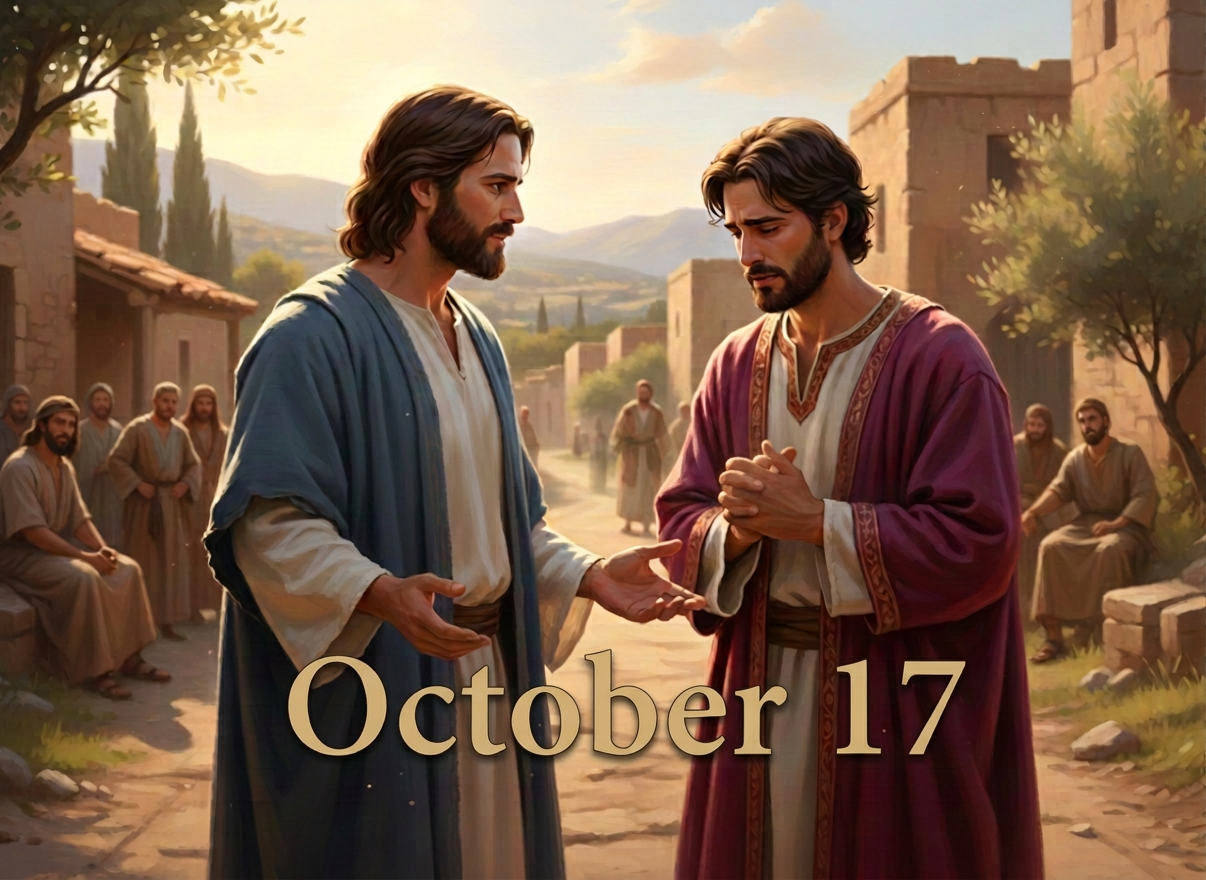
A reverent, cinematic biblical scene depicting Jesus speaking compassionately with a troubled wealthy man who has approached Him, inspired by the Gospel encounter of Jesus and the rich young ruler. Set on a dusty ancient road in first-century Judea, with warm natural light, historically grounded robes and architecture, expressive but respectful body language, spiritual depth, and a realistic painterly style. No text, no lettering, no halos, no modern objects.

Jesus started to leave, but a man ran to him and fell on his knees before Jesus. The man asked, “Good teacher, what must I do to have eternal life?” (Mark 10:17)


Unlike the man who approached Jesus in this passage, you understand that eternal life connected to a sacrificial mindset.

After discussing the way this man adhered to the Ten Commandments, Jesus told him to sell all he had and give to the poor.  He went away sad because he had a lot of wealth and couldn’t bear to part with it. He didn’t understand the spiritual law of generosity. He didn’t realize that the death grip he had on his wealth was preventing him from receiving the eternal riches of God’s Kingdom.

Fortunately, you hold a deep understanding about the spiritual law of generosity. You know from experience that the act of giving brings freedom from the fear of not having enough.

You give of your time and energy to meet the needs of the marginalized in your community. You are exhilarated by the sense of freedom you experience when serving Christ and serving others.

You understand that following Jesus requires great personal sacrifice which some may view as quite costly. You do not see things that way at all. You are grateful for the freedom you find in the space of grace.

Rather than animal sacrifices required under the old Covenant, the new Covenant calls for a lifestyle of self-sacrifice, in which you gladly participate.

As needs arise in your community, you demonstrate a sacrificial mindset by feeding the hungry, giving to the needy, counseling the troubled, and assisting the disabled.

In these simple, yet profound tasks, your personal sacrifices enable you to engage in a spiritual dimension where immortality is the promised result.

Your sacrifices of time, energy, money, and talents in helping others are actually service to the Lord because as Jesus explained, “What you have done for the least of these, you have done for Me.”


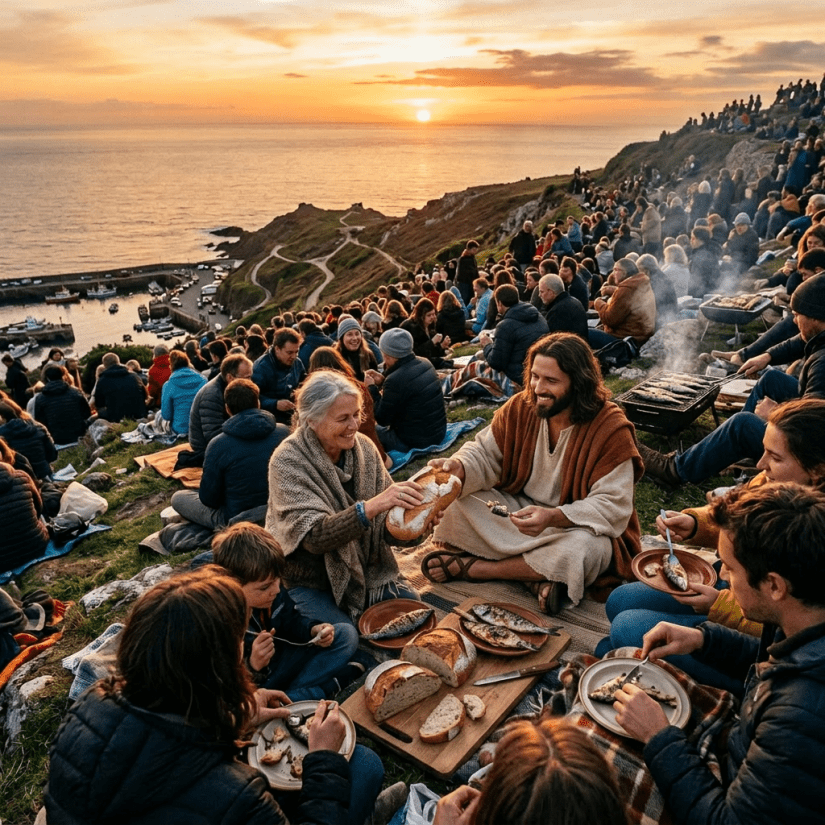
Group of people sharing food on a grassy hillside with ocean and sunset in the background
Tetelestai Recovery

Jesus’ Compassion: A Model for Our Needs

We see that during His mission on earth, Jesus never scolded anyone for asking too much or too often. In fact, He stated time and time again, “Just ask. I want to give you what you need. ”

The feeding of the five thousand demonstrated the Father’s heart through the acts and attitudes of His Son. Jesus had compassion on the famished crowd. He didn’t condemn them for being distracted by their growling stomachs. He didn’t belittle them for showing signs of weakness. He didn’t minimize their hunger by comparing it to His own when He fasted for forty days. It wasn’t His desire to see them suffer to prove their devotion.

They were hungry and He wanted them to be fed. Jesus met their needs abundantly. He provided more than enough. There may have been some who gave up and left early before the miracle arrived. This may account for the enormous number of leftovers His disciples collected after everyone was fed.

We realize it is critically important that we never become one who wanders away, feeling the pressure to fend for ourselves, rather than waiting to see what Jesus is doing.

We know there will be times of waiting. And during those times, we might not have a clear view of what is happening, or how the miracle will unfold, but waiting is part of the process, and we must become willing to put in the time…

Picnic on wooden table with bread, fish, butter, and mug by lake at sunset with group on shore
Tetelestai Recovery

The Feeding of the Five Thousand: A Lesson in Generosity

Picnic on wooden table with bread, fish, butter, and mug by lake at sunset with group on shore

In the multiplication miracle of feeding the five thousand, we see that Jesus was happy to give the hungry people as much food as they wanted. They ate until they were satisfied, and there was plenty left over.

By this example, we can rest assured that Jesus is pleased when He is given the opportunity to be generous. He is not stingy or miserly when it comes to providing the necessities of life. He will not withhold the resources needed to fulfill our destinies. We know that He wants us to have everything we need to successfully complete our human journey. However, there are times we may feel uncomfortable asking, for fear our requests might be based upon selfish motives.

As we level up, we learn this is a needless fear. God is a loving Father. He will not give us something that is bad for us. We think back to the days when our children were young, and they asked for candy when it was time for dinner. We didn’t judge or condemn them. We simply said, “No. That’s not good for you,” and then provided them with a healthy option instead. We know that God will do the same for us. He won’t give us anything that will do harm. We trust Him to protect us; sometimes even from ourselves.