Tetelestai Recovery

Idolatry of Emotions: Claiming Righteousness Through Grace

When we discovered the power of Jesus’ declaration, “It is finished,” we claimed tetelestai over our misaligned compass comprised of human emotion.

We stopped worshipping at the feet of our feelings and ditched them at the foot of the cross. We learned that our feelings were an unpredictable deity. We saw that exalting our feelings to a place of devotion, was nothing short of idolatry.

We made a firm decision to discover God’s thoughts of us, rather than our own thoughts of ourselves.

We didn’t feel like believing in our rightness, but the Word stated we were the righteousness (right-ness) of God. We were much more comfortable feeling wrong and running from it. We were unsure how to settle into knowing, rather than feeling.

It didn’t feel right to believe right, but once we got a revelation of grace, and stopped relying on how bad we felt, we discovered a sense of stability we’d never known before.

Tetelestai Recovery

How to Let Go of Resentment and Gain Personal Power

To remain in a position of power, we had to drop the resentments. While we sometimes felt as if our resentments were keeping us safe and preventing us from being hurt again, we eventually faced the fact that they were stealing our power and placing us in a perpetual state of victimhood. Resentment was the result of self-pity. If we carried our resentment, we were forced to experience the painful events over and over. But, on the other hand, we feared that if we released our resentments, it would give those offenders a free pass.

Neither position seemed to be working, so we searched for a new solution. We needed to release our resentments, but at the same time, we needed to know that justice had been served. We needed to know that those who had mistreated us didn’t get away with it. We wanted to settle the score, but we also wanted to exist in the higher spiritual plane, that Jesus referred to as the Kingdom of God. We knew that revenge-seeking would drag us down and pull us into chaos.

Sacred Text showed us the way. Since the same words appeared in both old and new testaments, we knew it was significant.

It is mine to avenge; I will repay. In due time their foot will slip; their day of disaster is near and their doom rushes upon them. Deuteronomy 32:35
Do not take revenge, my dear friends, but leave room for God’s wrath, for it is written: “It is mine to avenge; I will repay,” says the Lord. Romans 12:17-19

Surprisingly, based on these passages, we learned that revenge was not necessarily a bad thing. It only became a bad thing when we humans took it into our own hands, rather than leaving it for God to manage.

Tetelestai Recovery

How to Let Go of Resentment and Gain Personal Power

To remain in a position of power, we had to drop the resentments. While we sometimes felt as if our resentments were keeping us safe and preventing us from being hurt again, we eventually faced the fact that they were stealing our power and placing us in a perpetual state of victimhood. Resentment was the result of self-pity. If we carried our resentment, we were forced to experience the painful events over and over. But, on the other hand, we feared that if we released our resentments, it would give those offenders a free pass.

Neither position seemed to be working, so we searched for a new solution. We needed to release our resentments, but at the same time, we needed to know that justice had been served. We needed to know that those who had mistreated us didn’t get away with it. We wanted to settle the score, but we also wanted to exist in the higher spiritual plane, that Jesus referred to as the Kingdom of God. We knew that revenge-seeking would drag us down and pull us into chaos.

Sacred Text showed us the way. Since the same words appeared in both old and new testaments, we knew it was significant.

It is mine to avenge; I will repay. In due time their foot will slip; their day of disaster is near and their doom rushes upon them. Deuteronomy 32:35
Do not take revenge, my dear friends, but leave room for God’s wrath, for it is written: “It is mine to avenge; I will repay,” says the Lord. Romans 12:17-19

Surprisingly, based on these passages, we learned that revenge was not necessarily a bad thing. It only became a bad thing when we humans took it into our own hands, rather than leaving it for God to manage.

A Date With Destiny

Hidden in Darkness

Daniel 2:22  
He makes known the secrets that are deep and hidden.
He knows what is hidden in darkness and light lives within him.

Many of the good things you do are done in secret. You are not boastful or arrogant about your charitable contributions or personal sacrifices.

You help others in ways they may never realize. You attend to the needs of your family and community without recognition or fanfare.

Sometimes you feel as if your efforts are unappreciated or even unwanted.  There are times you believe you may be wasting your time and energy because you can’t see the fruits of your labor.

Thankfully, you have the Word of God and His wonderful creation to remind you that a seed hidden in the darkness is a harvest waiting to happen.

Seeds planted in soil remain unseen during the germination phase. In the dark, a seed breaks open and new life is formed. There is a waiting time before the shoot appears. There is another waiting time before the harvest comes.

In the same way, your good works and loving efforts may be often hidden in the dark for a time, but this doesn’t mean they remain unfruitful.

When the time is right, God brings your results into the light, much like the tiny plant which emerges from the dark soil. Your random acts of kindness and quiet loving gestures are no longer hidden in the darkness. The results become visible and each tiny sprout holds the promise of a bountiful harvest.

You may not always receive human recognition or praise for the contributions you make. Sometimes your good intentions may even be misunderstood. But God knows what is in your heart and He promises that someday you will enjoy a harvest which far exceeds your expectations.


Tetelestai Recovery

The Illusion of Relief: Understanding Emotional Dependence

The presence of unwanted feelings such as insecurity, inadequacy, fear, anger, and other social phobias, coupled with our inability to manage or control them, unleashed within us a desperation for relief at any cost. We soon learned of a temporary reprieve that occurred when our brain chemistry became altered. We didn’t care that the relief would be short lived or cause irreparable damage. The long-awaited relief of rightness, contrasted against the life-long agony of wrongness, offered such an enchanting embrace, we surrendered without a fight.

Without mind and mood altering substances, we fell into total despair. Sadly, these moments of disparity began to seep into every moment, and the temporary relief withdrew as quickly as it came.

We became slaves to our feelings. We tested the quality of our product by the way it made us feel. We watched for warning signs of overdose by the way our bodies felt. We discovered ways to get out of responsibilities by saying, “I don’t feel well.” We made all sorts of excuses to ourselves and to others, based on our feelings. We accused our dealer of cutting because his product didn’t make us feel the way we wanted, or the way it used to. We sank into despair when the supply ran out. We drove through blizzards, walked through storms, and did whatever necessary to get the substance that would make us feel right. We went without sleep, food, and basic necessities. We lost relationships and emptied bank accounts in a mad pursuit of a feeling we wanted to feel.

We were caught in a cycle of frenzied flight. Running from feelings we couldn’t stand. Searching for a feeling we thought we knew. We didn’t like to feel wrong, and we didn’t know how to feel right.

Tetelestai Recovery

Sometimes Anger is Appropriate

We felt certain that we could justify anger when it came to certain evils in the world. When we checked the Sacred Text, we found proof that anger can sometimes be appropriate; perhaps even righteous.

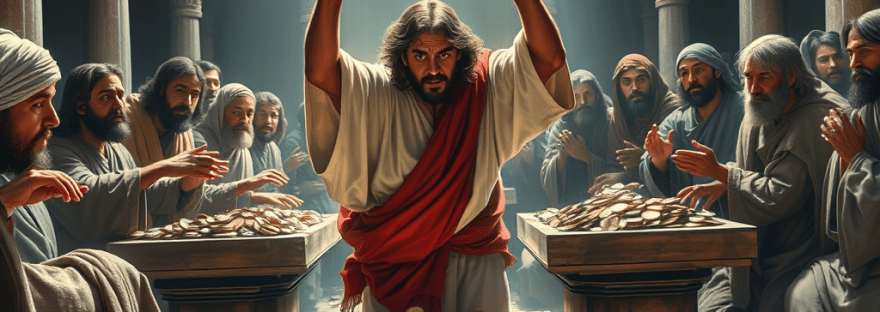
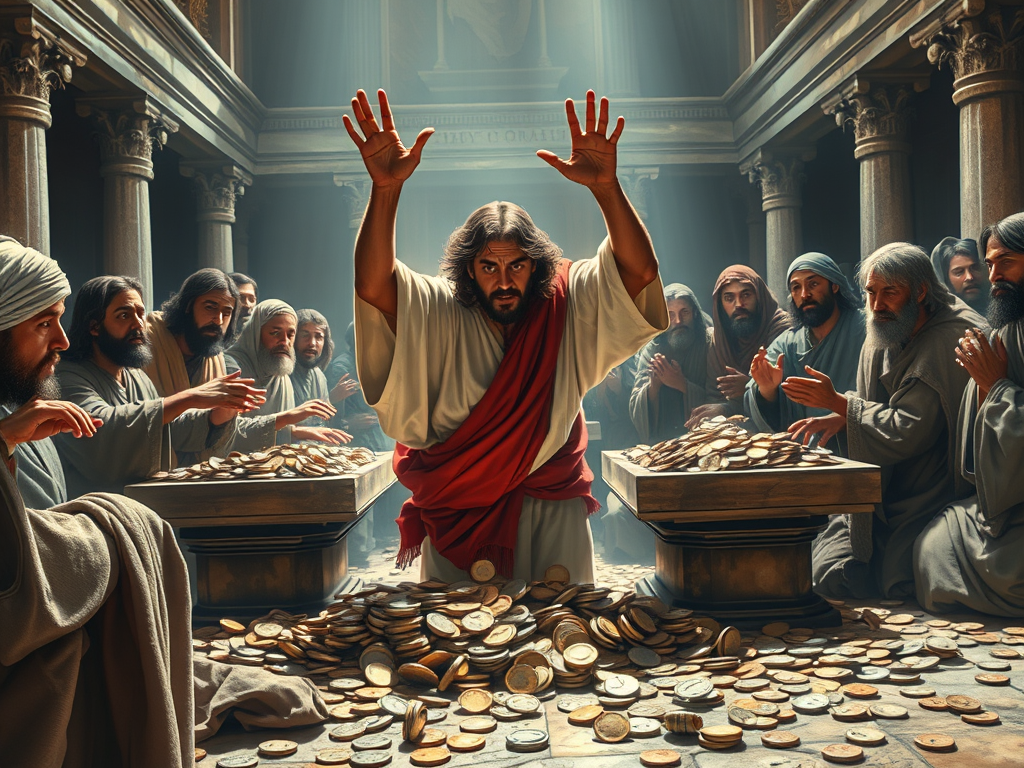
Jesus went into the Temple. He threw out all the people who were buying and selling there. He turned over the tables that belonged to the men who were exchanging different kinds of money. And he upset the benches of those who were selling doves.
Jesus said to all the people there, “It is written in the Scriptures, ‘My Temple will be a house where people will pray.’ But you are changing God’s house into a ‘den of thieves.’  
Matthew 21:12-17

So, after reviewing some of Jesus’ moments of fury, we concluded that there may, in fact, be times when anger would be an entirely appropriate reaction.

His reaction was more than simply a display of righteous indignation. It was a display of self-restraint. The Son of God, with an army of angels at His disposal, simply flipped over a few tables and ran people out of the temple. He could have whistled for an asteroid to hit the coordinates where they stood. He could have summoned a flesh-eating bacterium to consume them or an earthquake that would bury them beneath tons of rubble. He could have destroyed them in a million different ways, but he chose rather to use words, with a controlled show of force for emphasis.

We came to understand that when Jesus was angry, His methods were measured and restrained.

Home

Faith and Works: Understanding the Connection

Our works, that is our actions in everyday life, is a byproduct of our faith. We are moved by faith.

Many of us have tried to show we had faith through our actions – our good works, but felt unsuccessful and discouraged when we grew tired. This was because we were confusing the cause with the effect.

Think of salvation like a sailboat. God’s grace and promises are the wind — already blowing, already available. Our faith is like raising the sail. Once the sail is truly raised, the boat must move — not by paddling or effort, but because the wind carries it.

That movement of the boat is what we call works — the natural result, not the cause, of salvation. So, when someone says they have faith but there’s no movement — no change, no obedience, no fruit — it’s like saying their sail is raised but the boat isn’t moving. That’s impossible if the wind is real and the sail is truly up.

The book of James says, “Faith without works is dead.” He’s not saying our works save us, but rather, true faith always creates movement. 

Tetelestai Recovery

Don’t Get Too Cozy In Your Cave

In 1 Samuel 22, we read about David, the would-be king who is making decisions clouded by dysfunction. The story begins with rejection, danger, and drama. David is at risk. He has experienced trauma. He is out of his element, all alone, and without clear direction. His life has come down to a series of geographical moves and his only reason is simple, “I am here because it was not safe there.”

These words ring true for us as well. We have experienced trauma. In response, we run, we tell lies, we act crazy, and in the end, we finally find a cave where we can hide.

We enter our caves carrying something that makes us feel fierce. We carry memories of times when we weren’t so weak. Despite our insecurities and weakness, we also know there is resilience, tenacity, and charisma woven into our DNA by the Creator of the Universe.

In David’s story, he had the sword of Goliath strapped to his side, reminding him of his greatest victory. But, later, after experiencing his own trauma, it seemed his glory days were over. He is hiding in a cave which he refers to as his stronghold. Battling anxiety, depression, and loss, the cave becomes a makeshift fort for David and his absent army. Bringing an abrupt end to his promising career, his entire future has been destroyed by one man. The grief was too much to bear.

The man who once killed a giant with a rock, got hit between the eyes with trauma and it took him to a dark place. Everything changed. Nothing will ever be the same. He is alone. He is unprepared. He is in self-defense mode, and his behavior becomes irrational and unpredictable.

We too have experienced moments of trauma, laying the groundwork for our current dysfunctions. Whether we can remember them or not, each of us has heard, seen, or experienced things that made us feel unsafe, forcing us into unhealthy coping patterns. For some, the trauma was a single event, such as an accident, an illness, or a loss. For others, the trauma came gradually in waves, due to chronic pain, devastating disappointments, years of neglect, indifference, or abuse from a parent or spouse, or the emotional baggage of living in a deeply dysfunctional environment.

Chapter 7, Don’t Get Too Cozy In Your Cave https://a.co/d/gU3iw9Y

Tetelestai Recovery

The Next Right Thing

If we were to replicate an artistic masterpiece, for example, Michelangelo’s sculpture David where would we begin? A block of granite would be a good start, but after that, what next? A chisel in one hand and a hammer in the other, then tap, tap, tap away. It seems there should be no concern over the shape of the nose until the face has begun to take form. An artist would not frustrate himself over an earlobe’s curve if the nape of the neck has yet to be established.

It is one thing for a sculptor to envision his finished project. It is quite another thing, to plan for every tap, every move, and every chip. The first is art. The latter is insanity.

And so, we were given only one instruction at a time. God didn’t show us how to take the next 53 steps of our journey. He simply showed us one first, and then the next, and the next, and the next. He knew that we had a tendency to run out ahead of Him and wander off. Therefore, He gently kept us at His side, giving us only one instruction at a time. He knew that one simple stumble could place us into the path of the enemy, so His hand held us close. To counteract the enemy’s offensive moves, His plan had to remain flexible and changeable. Therefore, if He gave us the entire game plan, we might have run ahead and walked into a trap or missed His unexpected strategic maneuvers.

Therefore, we encouraged ourselves and each other with the simple mantra: Do the next right thing. That’s it, that’s all. God never asks us to make a five-year plan, complete with bar graphs and pie charts. He merely asks us to place one foot in front of the other, holding tight to His hand.

One step at a time, taking care not to run ahead, we found that God’s direction for us wasn’t always religious in nature, nor did every event seem extraordinarily significant. But as our journey continued, we realized that each right thing led us to the next right thing. And in this realm of just one thing, the next right thing, we found balance in our walk and harmony with ourselves.

Chapter 13, The Next Right Thing https://a.co/d/deLSbDM

Tetelestai Recovery

Just Keep Walking

Our relationship with Jesus has grown through some amazing times. It is an exciting experience of falling in love with the King of Kings who chose us as His Bride. He says He delights in us. We say the feeling is mutual!

Now, we no longer feel apprehensive about our desires. They have been placed there by God and will be fulfilled through our partnership with Jesus. As a member of His royal family, our needs will be met so we can be busy with Kingdom business.

Many Citizens of the Kingdom are hurting, hungry, and sick. Some are simply battle-weary and overdue for a little rest. Our Kingdom assignments are to reach out to them through the means of written words, spoken words, authentic friendship, and compassionate care.

In our New Normal, we find a sense of purpose and direction in knowing that we are on a mission for our King. He has planned coincidental meetings with people who have been called to fulfill their own assignments in partnership with ours.

Our New Normal is everlasting recovery, a new perspective of life’s adventure, and an ability to take life in stride, knowing that the One who created the universe and everything within it is on our side. He is with us and for us. He is our Advocate, our Father, and our Spirit. This New Normal gives us fantastic strength to endure whatever matters come before us. We walk in partnership with our Creator to the divine destiny He has set before us. Our path may not always be easy or smooth, but it is softened by walking with Him.

In our New Normal, we can release our fears of making mistakes and manufacturing failures. We look straight ahead, eyes fixed on Jesus, with our feet firmly planted on level paths. What we want and what He wants for us, are synchronized perfectly.

We simply walk it out together, one step at a time.

Tetelestai Recovery 2 – Our New Normal https://a.co/d/dh91w7s