At the end of the movie, while still experiencing these physical reactions associated with danger, the lights in the theater would brighten and the audience would stand to leave. Those feelings of tension, which had been so prominent a few minutes earlier, would completely disappear along with its physiological effects.
We were never really in danger, but our feelings responded to sights and sounds from the screen, rather than the truth of reality. Surprisingly, our physical responses quickly corresponded with our feelings, despite the fact that our emotions were based on unrealities.
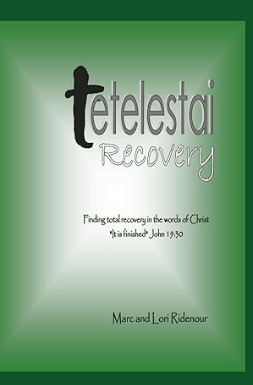
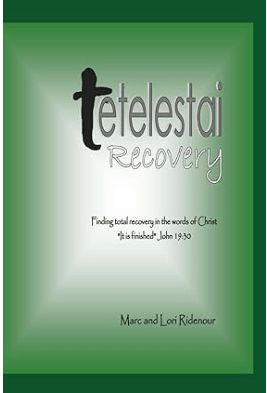
Tetelestai Recovery – Finding Total Recovery in the Words of Christ, “It is Finished!”
Within the pages of this book you will learn how to move out of your addiction and into your destiny. Through their personal journey of recovery, the authors present indisputable evidence that total healing and release from the disease of addiction can be found through the final declaration of Christ, “It is finished!”
Whether you are a suffering addict; an exhausted 12-stepper; a chronic relapser; or a person who loves one, Tetelestai Recovery will open your eyes to the possibility of permanent sobriety without the struggle. This revolutionary concept is bringing radical changes to the recovery community. You are here for a reason and it’s time to find out why.
When comparing our cognitive distortions against the eight descriptive words in Philippians 4:8, we find a way out. With these eight guardrails in place, we can choose which thoughts to keep and which ones to set aside.
Pure
Right
Excellent
Praiseworthy
Lovely
Admirable
Noble
True
Using the acronym, PREPLANT, we can check ourselves regularly throughout the day to make sure the thoughts running through our heads line up with at least one on the list.
If a thought does not meet the criteria, it is deemed unhealthy and carries the potential to make us sick. We cannot level up until we let go of the thoughts that don’t measure up.
One member of the group shared about self-esteem issues that led him into criminal behavior and addiction. From childhood, he had been trying to cope with the confusion of trauma, unaware of what to call it. He struggled with feelings of unworthiness and was unable to feel a sense of value. That all changed when he made the choice to learn about trauma and its effects. He chose to develop a relationship with Jesus, his Healer. He made a choice to forgive and move away from the pain.
Because he says yes to openness, and no to suffering in silence, he now operates in a position of influence and serves as an advocate for others. He has the wisdom of God and the heart of a servant.
Another member shared about his past life of uncontrollable rage that resulted in murder. He spoke about feeling as if he had no choice when it overtook him. His experience with rage was like driving on a slippery, muddy road at full speed, headed straight for the ditch, and unable to stop.
It was hard for us to believe he had ever struggled with rage. This is a man who carries the joy of the Lord on his face. His smile is contagious, his demeanor is humble, and he radiates positive energy whenever he walks into the room. He often speaks of love and forgiveness as if it is his lifeline. He makes a conscious decision to forgive whenever he is wronged. He refuses to carry a grudge, but instead, chooses to walk in love. He says no to rage and yes to compassion. Forgiveness and joy are no longer second nature to him; they are his new normal.
We noticed that Jesus’ final word tetelestai, translated into the English phrase, it is finished, seemed to imply a sense of giving up. We found this to be an unfortunate language barrier. As it turned out, in the original Greek language of the New Testament, this word tetelestai is a declaration of victory, completion, and success.
Tetelestai is the comment an artist might whisper after completing his final brush stroke on a masterpiece.
Tetelestai is the report a soldier would bring to his commanding officer when a battle was over, and victory had been secured.
We believe our Savior used His final breath on the cross to declare for all time, to all creation, in every dimension, that there is nothing left undone: It is finished; Tetelestai.
There is no more drudgery to sobriety and no more anguish to recovery. There is no self-effort which must be added to what has been declared, Tetelestai.
IT IS FINISHED
In matters of our recovery from substance addiction and the mental dysfunction which accompanied it, we were completely helpless. We had no thoughts that could heal our thoughts. We had no disclosure that could remove our secret shame. We had no detour that would lead us out of the darkness. We were lost. We were alone. We were afraid.
But suddenly, in a random, unexplainable moment, the gift of Tetelestai was revealed. We had run out of options, yet in that barren wasteland of emptiness, we stumbled upon a treasure trove of truth.
These needs keep us running from one relationship to another; one career path to another; one church to another; one substance to another. We play the blame game, accusing our parents, our partners, or our culture. We know we have unmet emotional needs, so we are naturally drawn toward people and situations that promise to meet them. Of course, it is only a matter of time before they fail us. No human can fully meet our deep emotional needs. It is a painful lesson we have to learn time and time again, until we begin to understand what it means to level up.
We must accept the fact that no human being is equipped to completely fulfill another human being’s emotional, spiritual, and psychological needs. It is just not possible. And it is not their fault.
To level up, we must set aside our petty resentments about how others have failed us. We must admit, we are foolish to think they won’t. They are human too!
From this new perspective, we begin to see Philippians 4:19 much differently. God promises to meet all our needs. Not just physical and spiritual, but emotional as well. So, we must now ask ourselves, “What are some of my emotional needs?”
For I know the plans I have for you,” declares the Lord, “plans to prosper you and not to harm you, plans to give you hope and a future. Jeremiah 29:11
***********
The truth of God’s word is unchangeable and lasts forever. What He says remains in effect for anyone who chooses to believe it.
If He promises us hope and a future, and we choose to believe this for ourselves, we can live in eager anticipation that His word is being fulfilled in our lives. We can build our lives around the fact that we have hope and a future. It is the solid rock upon which we construct our goals and visions.
Yet we also wonder, “If God’s word is true, why are there people living without hope? Why wouldn’t His promise apply to everyone across the board?’
The answer is deeply complex. The reason God’s promises are not fulfilled is because His words rely on the recipient laying claim to them. These fantastic promises of God are often hard to believe for ourselves. Sure, we believe God is good, but we also know that we aren’t. We believe He does great things for good people, but it seems a bit presumptuous to expect the same blessings as someone who was busy doing great things for God while we were selfishly making a mess of our lives. We know the Bible talks about penalties for bad behavior, so it seems that if we believe in the blessings, we must also fear the curses.
That may have been a valid statement before the cross. But we live under Grace, not Law. Jesus broke the power of the curse, so we can all live in the blessing if we choose to believe it. We need not fear the curse or the consequences of our own mistakes. Those issues have been resolved. We are in a continual state of cleansing, like standing beneath a waterfall. Even a sin committed one second ago, is already washed away in the living water. We live exclusively in the blessings and enjoy firm standing on the promises. Curses do not cling to us. Blessings chase us down.
My purpose on this planet is not just to stay clean and sober. My purpose is to discover my divine destiny while helping others discover theirs. It is my mission to join forces with the Creator of the Universe in order to bring heaven to earth. I am alive today so that I can tell everyone who suffers from the disease of addiction: there is hope, there is healing, and there is freedom. The supernatural power of Jesus is for you, your family, and your future.
During the times when dark forces are taking their best shot, making your situation look hopeless, you can safely conclude that Jesus is on the scene and the enemy has just been served notice of eviction.
Maintain your conversation with Jesus, and never let your gaze drift to the raging symptoms. If you find it hard to believe, that’s okay. Faith will come. Simply pray the breakthrough prayer:
“Jesus, I believe. Help my unbelief!”
Tetelestai Recovery 1: It is finished; Chapter 14, The Breakthrough Prayer https://a.co/d/jdfppvK
I was plagued by the demon of addiction. It made do and say crazy things. I hurt those I loved. Addiction made me depressed, unreliable, and unreasonable. I now know that the demon of addiction is a shapeshifter and never wants to be exposed for its true identity. My opioid prescriptions were as addictive as any street drug, if not more so. Still, I considered myself immune to the label addict, preferring to call my drug of choice, medication.
Pain pills after a back injury made me feel the way I’d always wanted to feel. The opioids triggered a reaction in my brain and slowly, like a dimmer switch, my mind lost its luster. I failed to recognize how lifeless and dull it had become as I moved through my days in a flurry of activity, struggling to prove that I was not the person I had become. I became disoriented in the darkness for many years, and I lost all hope that it might be possible to get free. I believed my pain would be unbearable if I ever stopped taking the pills. It was a deceitful lie straight from the pit and one that wreaked havoc on everything and everyone in my path.
I needed help. I needed hope. I needed healing and deliverance from a dark captor who refused to release me. I needed someone to stand in the gap and believe for me, because I had lost even a spark of faith to believe for myself.
Through a catastrophic chain of events, in the very lowest point of my life, I met some brave believers who stood in the gap for me with their own faith; just like the father did for his son in Mark 9:18-27. Any flicker of faith I may have possessed before that time had been snuffed out and I was lost in the darkness. These kind souls came to me in my despair and showed me the light of Christ’s love. From the illumination of their light, I began to see Jesus in a way I had never seen before. He appeared as my healer, my deliverer, and most importantly, my rescuer. He accepted me in my fallen position and still loved me, despite who I had become.
Tetelestai Recovery 1: It is Finished, Chapter 14 The Breakthrough https://a.co/d/gqrG8QF
As the believers waited in the upper room, the writer of Acts reported, “Suddenly, there was a sound like a mighty rushing wind…”
We see the word ‘suddenly’ and are reminded of those miracles we love so much. Jesus feeding the 5000 in a single afternoon; healing a blind man with mud; telling a dead girl to get up; and dozens of other stories set in a supernatural time warp, where the magic was instantaneous, and the desired results were immediate.
Obviously, Jesus was on a mission. He was out to prove that He was from God and to demonstrate the will of God by healing, delivering, feeding, and forgiving. If His miracles didn’t occur instantly, it would have been difficult for the onlookers to make the connection that Jesus was the one who had been the catalyst.
Additionally, while Jesus was in human form, the supernatural power of God did not have to travel through a flawed human to reach its destination. Perhaps His miracles were instantaneous because divine energy could flow freely through such a pure vessel. It didn’t get clogged up by the spiritual sediment and emotional toxins that the rest of us humans tend to carry. But, for whatever reason, miracles in Jesus’ day seem different than the miracles today. We rarely experience immediate, supernatural, instantaneous miracles and many of us struggle to hold onto our faith when we are waiting for our miracle to arrive.
We get discouraged because our ‘suddenly’ isn’t happening as quickly as we’d like. We start to doubt our resolve and question our faith because we see no results.













 Finding Total Recovery in the Words of Christ, "It is Finished!"