
Broken iron chain on a rocky mountain path leading toward a bright, sunlit horizon.
Tetelestai Recovery

Breaking Free from Labels: Healing from Addiction

For God has not given us a spirit of fear, but of power and of love and of a sound mind. 2 Timothy 1:7


We are confident that the mental dysfunctions of our past are no longer a part of our reality, but when someone questions our sanity or sobriety, the words hang in the air and make us doubt. We wonder if we will ever be viewed as someone who is healed and delivered. Even though we are clean and have a sound mind, accusations and distrust threaten to rob us of the joy of our salvation.

Other statements that land a direct hit: “Once an addict; always an addict,” or “You are so… stupid, angry, ugly, creepy, aggressive, etc.” These insults are flung during conflicts, as an attempt to overpower and score a win. The irony is that none of the humans locked in conflict ever gain the upper hand. The enemy always does.

As we level up, we begin to recognize the powers of darkness laughing about how easily humans can be manipulated into turning on each other. We can see how every word one human throws at another during conflict or power plays serve as bricks the enemy can use to construct new strongholds in both…

Bright blue beam of light descending into a dark, jagged mountain valley with glowing flora.
Tetelestai Recovery

Harnessing Positive Energy to Overpower Cognitive Distortions

To pull down these internal strongholds of cognitive distortion, we speak words of life, newness, clean slate, fresh start, and positive energy. We claim power and healing in the promises of God. We absorb life-giving, life-sustaining words from our spiritual siblings. We notice words of life all around us, electrifying the atmosphere with sparks of light. We generate spiritual energy when we speak these words to ourselves and our fellow travelers. Our power intensifies as we receive words of life from Sacred Text, songs of praise, prayer, and uplifting conversations.

These energy producing words are breaking through the barriers and exposing the enemy’s hiding places. Our strongholds are crumbling like the walls of Jericho as we shout praise to God. These vibrations from our vocal cords pulverize the enemy’s garrison like a jackhammer.

The simplicity of using words of life to break down strongholds and fight spiritual battles is a major breakthrough. We speak hope and healing to ourselves and each other, then watch in anticipation as the walls begin to crumble…

A brick wall exploding from the center with bright golden light and flying debris.
Tetelestai Recovery

Overcoming Fear and Despair: The Power of Vocal Vibrations

We fight our battles in the spirit realm through vocal vibrations. We speak the words of God to pull down cognitive distortions that produce fear, despair, discouragement, and low self-esteem. These are the strongholds of the enemy.

Strongholds are the enemy’s Trojan horse. They are the mental constructs where the forces of darkness hide, staging attacks from within. These forts are constructed, brick by brick, through words and phrases heard over the course of a lifetime. Some of the words come from others, some come from ourselves. But ultimately, each brick in the stronghold originates from the enemy.

As we level up, we can sense that strongholds in our minds are slowly being dismantled. Some of the bricks fall and roll away.

However, some of the bricks are slung back at us. Some of these bricks are used by the enemy to build new strongholds in a different area of our lives. Often, these bricks come in the form of specific trigger words that catch us off guard. These words describe our old selves or suggest we have not really changed. The words are like bricks from the old strongholds landing hard and causing us to question our progress…

A narrow dirt hiking trail winds through wildflowers toward majestic, sunlit mountain peaks.
Tetelestai Recovery

Navigating Faith’s Highs and Lows

As we release our addictions with the words of Jesus, “It is finished!” and settle comfortably into our new normal, we feel gratitude beyond words. The dysfunctions we struggled with in the past are fading in the distance. We are on firm footing and making solid progress.

Sometimes we make really good progress and are pleased with the distance we cover in such a short time. We feel that our relationship with God is in great shape, and we are motivated by our sense of accomplishment.

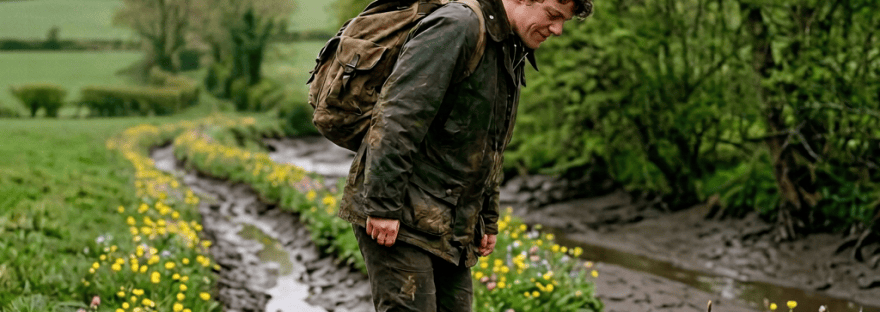
At other times, however, we feel as if we were trudging through mud, putting one foot in front of the other, lacking any drive or inspiration. We feel inadequate, overwhelmed, and disinterested. During these times, we don’t feel so great about our relationship with God. We assume He is disappointed with our lack of energy and enthusiasm.

These times are rare, but they happen often enough to make us question our stability and resolve. We wonder if one of these periods might last so long that we will just give in and give up.

We don’t want to lose what we have gained, and we don’t want to miss the joy of the journey, so the thought of trudging through the marshy swampland of doubt, discouragement, and disagreement feels very threatening.

We love the mountaintops and the flowery meadows, but we must face the fact that dry deserts and muddy bogs are also part of the expedition. We must make peace with both if we want to get where we are going.

When the roads are easy, we feel joy in looking back to see how far we’ve come. When the roads are difficult, we seem to take one step forward, two steps back. Sometimes we slip and fall. Sometimes we just stand still and shrug. Even when we do finally get on firm footing again and start to move forward, we scold ourselves for not being stronger, more resilient, or more determined…

Swirling trails of blue, purple, and gold light against a dark, blurred backdrop.
Tetelestai Recovery

Embracing Movement: The Journey from Here to There

Swirling trails of blue, purple, and gold light against a dark, blurred backdrop.

In our human condition, we seem to find ourselves here, trying to get there. Then, when we finally get there, it becomes here, and a new there looms on the horizon.

We are not made to be static or immobile. We are made to move. We are designed to set goals and achieve them. We are passionate about progress and driven by ambition. However, we are often annoyed by the process.

Waiting is exhausting. Waiting is painful. Waiting is a violation of our sense of urgency. Waiting disrespects the value of our time.

Moss-covered stone heart with golden light glowing from a large central crack.
Tetelestai Recovery

Overcoming Emotional Depletion and Finding Balance

Moss-covered stone heart with golden light glowing from a large central crack.

When we pull away from relationships because the emotional cost is too great, we feel like a bad person. We want to follow the leadership of Jesus. We want to be the kind of person who turns the other cheek and goes the extra mile. But being that person takes its toll on our sense of well-being. Our trust turns into suspicion. Our self-sacrifice turns into self-defense and self-preservation. We become discouraged and frustrated. Our personal investments don’t always pay off and it seems pointless to throw any more emotional currency toward relationships that are bankrupting us.

With our emotional center depleted, it is easy to just shut down and go dark. For some of us, the darkness is called depression, and we struggle with thoughts of self-harm. For some of us, the darkness is shoved aside with distractions. We bury ourselves in work, entertainment, shopping, or anything else that will keep us from dealing with our unmet emotional needs.

These needs keep us running from one relationship to another; one career path to another; one church to another; one substance to another. We play the blame game, accusing our parents, our partners, or our culture. We know we have unmet emotional needs, so we are naturally drawn toward people and situations that promise to meet them. Of course, it is only a matter of time before they fail us. No human can fully meet our deep emotional needs. It is a painful lesson we have to learn time and time again, until we begin to understand what it means to level up.

We must accept the fact that no human being is equipped to completely fulfill another human being’s emotional, spiritual, and psychological needs. It is just not possible. And it is not their fault.

To level up, we must set aside our petty resentments about how others fail us. We must admit, we are foolish to think they won’t. They are human too!  

From this new perspective, we begin to see Philippians 4:19 much differently. God promises to meet all our needs. Not just physical and spiritual, but emotional as well…

A despondent man sits before a large, luminous forest painting in a dark room.
Tetelestai Recovery

Letting Go of Perfectionism: A Spiritual Journey

Although introspection is important to growth, it is not the main purpose of our spiritual awakening. We are moving into a new position of authority in Christ. We are leveling up. We are no longer human beings having a spiritual awakening. We are awakened spiritual beings affecting the realm of human existence.

Admittedly, human nature can often get in the way, so we frequently ask the Holy Spirit to show us where we need to improve. We ask for help in making the necessary changes. We believe we receive that help and start thanking God for the results even before we see them. We use the words of Christ, “It is finished!” (Tetelestai) to call an end to our obsession over shortcomings and our continual dialogue of negative self-talk.

Empowered by the Spirit of God, and emboldened by the words of Christ, we let go of the things that trip us up. We release our grip on perfectionism. We dismiss that internal committee in our heads who sit in judgement of our every motive, thought, behavior, or attitude. We stop auditioning for the lead role and find our proper place in the supporting cast. With the spotlight on Jesus and what He is doing, we take our eyes off ourselves and are relieved of self-consciousness.

Tetelestai Recovery

Forgiveness and Healing: Submitting Our Claims to God

We are damaged humans who have been damaged by other humans. Our only hope of recovery is to submit our claims to God and wait for Him to reimburse us for our loss.

We finally understand that when Jesus instructs us to forgive, He is not telling us we must sustain damage and accept it as okay. He also isn’t telling us that we don’t have a valid claim. In fact, He is stating the exact opposite.

The fact that forgiveness is necessary, means an injury or loss has occurred. Jesus is not denying our claims. He is validating our losses and confirming their legitimacy.

He doesn’t suggest we just get over it. He doesn’t instruct us to ignore it and congratulate ourselves on taking the high road.

 He instructs us to forgive because he wants us to gain access to His full coverage comprehensive plan. Jesus is telling us, “Submit your claim to me, and I will take care of all repairs and injuries.” He knows that the process is too exhausting and emotionally charged for us to deal with on our own. He also knows that when two humans try to settle up, they rarely get it right and they seldom get it done. 

(Tetelestai Recovery – Our New Normal pp 113)

Tetelestai Recovery

From Relief to Despair: The Costs of Emotional Dependency

The presence of unwanted feelings such as insecurity, inadequacy, fear, anger, and other social phobias, coupled with our inability to manage or control them, unleashed within us a desperation for relief at any cost. We soon learned of a temporary reprieve that occurred when our brain chemistry became altered. We didn’t care that the relief would be short lived or cause irreparable damage. The long-awaited relief of rightness, contrasted against the life-long agony of wrongness, offered such an enchanting embrace, we surrendered without a fight.

When our minds were not altered, we fell into total despair. Sadly, these moments of disparity began to seep into every moment, and the relief withdrew as quickly as it came.

We became slaves to our feelings. We tested the quality of our product by the way it made us feel. We watched for warning signs of overdose by the way our bodies felt. We discovered ways to get out of responsibilities by saying, “I don’t feel well.” We made all sorts of excuses to ourselves and to others, based on our feelings. We accused our dealer of cutting because his product didn’t make us feel the way we wanted, or the way it used to. We sank into despair when the supply ran out. We drove through blizzards, walked through storms, and did whatever necessary to get the substance that would make us feel right. We went without sleep, food, and basic necessities. We lost relationships and emptied bank accounts in a mad pursuit of a feeling we wanted to feel.

We were caught in a cycle of frenzied flight. Running from feelings we couldn’t stand. Searching for a feeling we thought we knew. We didn’t like to feel wrong, and we didn’t know how to feel right…

Tetelestai Recovery

Renewed Identity in Christ: From Regret to Redemption

We began to thank God for His provision even when we felt needy:  

The Lord is the Spirit, and where the Spirit of the Lord is, there is freedom. 2 Corinthians 3:17

We believed God for His righteousness even when we felt wrong. We believed in ourselves as new creations even when we felt damaged. We stopped living in regret, even when we felt as if we should.

We no longer identified with who we were, but rather, we identified ourselves as who we became at the moment, we began our Tetelestai Revolution. We had come to know love that we had never known before. We had received a personal pardon from the King of Kings and according to Ephesians 3:19, we were becoming filled with the fullness of God, which was gradually squeezing out our tendency to be full of ourselves.