

Tetelestai Recovery

Word Seeds

We believe in the scriptural principle of sowing and reaping. We see the effects of this principle in the natural realm as well as the spiritual. We are certain that an oak tree will not grow from a thistle seed. Therefore, we do not expect to receive hope and healing by speaking of our addiction as a lumbering giant which threatens to steal our sobriety.

We dare not speak of relapse, as this seed grows into a massive, poisonous vine which produces an itchy sensation known as irritable, restless, and discontent syndrome. We dare not speak of our past indiscretions as a boastful or laughable matter, for this seed will grow into a field of dandelion memories with brightly colored egotistical blooms. How quickly they turn to hollow puffs of fly-away seeds, searching for another ego to embed! We dare not speak of our resentments, for this is the thicket which depletes our energy and slows our progress.

The words which produce a harvest we don’t want ought never to be sown by our voice. The negative words which have been spoken to us, or about us, or by us, must be pulled up by the roots before the harvest ever comes.

We begin our day with a simple statement from our own lips, “I cancel out any negative words which have been spoken or written to me, about me, or by me, in the name of Jesus. I ask the Holy Spirit to destroy any growth which may have occurred from these cursed seeds, and to remove them by the roots.”

Those things which we believed of ourselves, based on the things we were told by other sick people from our past, had emerged as a thicket of tangled thoughts and continuing behaviors. As we walked through the steps of our recovery, we found undergrowth which kept tripping us up. When we released our recovery into the hands of Jesus, the Holy Spirit began to guide us regarding the removal and elimination of these parts of us we didn’t know how to manage. Some of us needed counseling, some needed medication, some needed a change in diet or activity, but all of us needed supernatural healing in many layers.

Tetelestai Recovery – Chapter 9, Saying is Sowing
https://a.co/d/2YrZd9u

Tetelestai Recovery

Self Destructive Tendencies

We found the facts of the first story in Mark chapter five, concerning a demon possessed man who cut himself and lived in tombs, to be tragic and disturbing. We also identified with him in a way that few others can. This man was out of his mind, and everyone knew it. The historical facts had proven that human power was no match for a demon. Evil was an entity to be feared and avoided.

When we were lost in our addiction, we were self-destructive, violent, fearful, crazy, and more conspicuous than we cared to admit. The demoniac man is one we relate to with deep heartbreaking empathy. We walked his path. Like him, our path led to Jesus. And in like manner, Jesus called out our demons and returned us to our right minds.

  • Fact: this man was violent and dangerous.
  • Fact: anyone who got close got hurt.
  • Fact: the man had been this way for many years.
  • Fact: there was no treatment or remedy available for him.
  • Fact: no mortal man could throw down with a legion of hell hounds and live to tell about it.
  • Fact: the demoniac man ran toward Jesus.
  • Truth: Of all these facts, only one held any significance: He ran toward Jesus.
  • Truth: When he ran to the Prince of Peace, with his frightening facts, they were overpowered by the Truth.
  • Truth: The man’s sanity was restored, and his life changed forever.

Oddly, the story states at this point that the people were afraid. Sadly, when we were delivered from our addiction, some of our friends and family were afraid too. They were afraid it wouldn’t last; afraid it was too good to be true; afraid it was a manipulation technique; or just afraid of being hurt again.

Tetelestai Recovery – Chapter 8, Facts are Changeable

https://a.co/d/1wqIxA6

Tetelestai Recovery

Not Just Another Statistic

Truth can change the facts but the facts can never change the Truth.

We discovered within the Tetelestai realm of recovery, we were no longer destined to remain stuck in our sickness and disoriented in our dysfunctions. We were painfully aware of the facts concerning statistics, relapse, and case studies. We also knew the facts of our past, our failures, and our crimes.

We could not rely too heavily on these facts however, for if we subjected ourselves to natural results, we would forfeit the opportunity of a supernatural override. If we allowed ourselves to be enclosed by a fence of facts, we would once again fall victim to the old status quo. In agreement with Christ, we declared, “Tetelestai,” against becoming just another statistic.

We looked to the fifth chapter of the gospel of Mark to discover Jesus’ total disregard for facts. In this one chapter, we found three unique and unrelated accounts of individuals who desperately sought to change the facts of their reality. Each case study contained significant details which would negate the likelihood of change. To change an unchangeable fact is outside the realm of reality. We, like the characters in Mark 5, rejected typical reality based solely on facts. We believed that our righteous Judge could and would overrule the facts to establish His trademark justice which is lovingly steeped in mercy.

When we claimed the powerful declaration of Christ, “Tetelestai,” over our sickness, poverty, strained relationships, and criminal records, we were, in essence, asking Jesus to override our human facts in preference to His divine truth concerning our divine purpose and potential.

Tetelestai Recovery – Chapter 8, Facts are Changeable

https://a.co/d/hGqluhL

Tetelestai Recovery

Faith and Doubt – The Alternating Currents

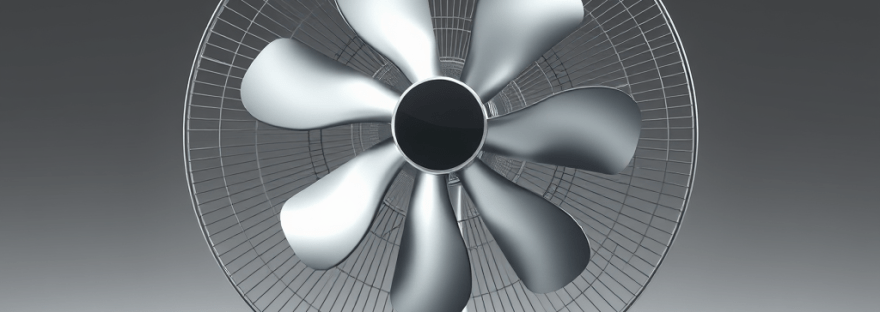
We imagined an electric fan. We could manually spin the blades and create a slight breeze. Obviously, we would have to consistently place our fingertips on the top of the slowing blades to give it another spin. Our entire attention would be devoted to managing the spin of the blades. Our obsession with keeping those blades spinning would consume us, and we would be able to accomplish little else.

If, however, we became willing to plug the fan in to an electrical socket, the blades would spin without effort, in a smooth rhythm, independent of our attention. The effects would be much more noticeable, yet effortless. We could remain active and alert with the more important duties of life, comforted by the breeze of an unseen power.

Faith and doubt, while appearing to be polar opposites, are the alternating currents which work together, generating an absolute belief in Christ. We cannot fully resolve our doubts within our faith. That’s why Jesus tells us time and time again, “Only believe.”

Faith in wholeness, when we felt so broken, was more work than we anticipated.

We worked to believe that somewhere in time, we would possess this shalom which Jesus had bequeathed us before His death.

We worked to believe, when doubts bubbled to the surface after losing our temper, feeling depressed, or experiencing muscle cramps from the lingering effects of the toxins we had used.

We worked to believe our shattered lives could be put back together when legal issues remained unresolved and court cases loomed in our future.

We worked to believe that Jesus’ wholeness could restore us to our original value when we found ourselves faced with the wreckage of our past and the rejection from our families.

We worked to believe in the wholeness of Christ coursing through our veins, restoring the health of mind and body when our inner voice kept telling us we were being foolish and naive.

Finally, we concluded that the only way to test this hypothesis was to presume the words of Jesus were true and choose to believe that they might actually be able to work for us. It seemed worth a shot. After all, we were out of options, so what did we have to lose?

Tetelestai Recovery – Chapter 6, Shalom

https://a.co/d/fwitIMs

Tetelestai Recovery

Settling the Score

In our New Normal, it seemed that forgiveness was an issue we struggled with at every turn. Failure to forgive made us feel guilty. Trying to forgive made us feel irritated. Convincing ourselves that we had already forgiven, when we knew we hadn’t, made us feel like phonies. It all just seemed too much. When someone did us wrong, and we incurred a loss of self-worth, inner peace, reputation, or security, did God really expect us to forgive the offense and get over it?

Was it His intent that we sustain our losses and silently endure offenses to our own demise? We didn’t think that sounded like the reasonable expectation of a loving, protective Father! We thought there must be more to this concept of forgiveness than just suffering in silence and becoming a speed bump to anyone who ran over the top of us.

Vengeance is Mine; I will repay. Deuteronomy 32:35

We examined this Sacred Text carefully and realized it contained two separate promises.

The first phrase was a promise that God would be bringing justice to the offender. The second phrase confirmed that God would repay us for the damage we sustained.

When we were offended, disrespected, lied to, or abandoned, we suffered humiliation, rejection, and loss of self-esteem. Therefore, since God promised to repay us for our loss, and exact revenge on the one who wronged us, then the forgiveness issue was less about protecting ourselves and more about trusting in a God of justice who promised to set all things right.

Tetelestai Recovery 2: Our New Normal; Chapter 7, Keeping it Vertical

https://a.co/d/8KdgTwa

Tetelestai Recovery

Cognitive Distortions

Examine the magnified photo of a scratched vinyl record (see visual aid 1).  Imagine the circular grooves in the album as healthy neuropathways of the brain.  The impact of living in an imperfect world inflicts wounds and distorts our thought processes; much like a scratch in the album distorts the quality of sound it produces. 

A scratched record will not produce the same quality of sound as the non-scratched original.  A vinyl album is fragile and can be easily scarred. If mishandled, it will become lined with grooves which go against the grain of its original design. Once this happens, the needle will frequently slip into the scratch-lines rather than gliding smoothly along the original sound wave channels. This creates audible effects and creates chaos for the listener.

  • Visual Aid 1: Scratched record album; magnified.
  • Visual Aid 2: A coin placed on the headshell above the needle. The purpose is to provide extra weight on the needle, so it doesn’t bounce out of the sound wave channel and follow the groove created from a scratch.
  • Visual Aid 3: Sound wave grooves magnified 1000 times.

The Takeaway

 By placing the weight of the Word on our cognitive distortions, the electrical impulses in our brains began to follow the original pathways designed by our Creator. The Word guides our thought processes and helps us stop jumping from distortion to distortion.

Tetelestai Recovery Volume 2 – Our New Normal; Chapter 3, Brainwashed

https://a.co/d/7q67TdX

Home

Redeemed

If you have a coupon you wish to redeem at the store, you are expecting to trade a worthless slip of paper or digital image for something of value. In other words, the real value of your coupon doesn’t exist until it is redeemed.

We are not defined by our history, we are remade and redeemed by it. Our true value is revealed through redemption. Our history brings us into an even deeper relationship with our Maker. God takes our past and weaves a new narrative which brings new life and a DEEPER life with Christ as our advocate and example.

In 2nd Corinthians 5:17, Paul writes, “Therefore, if anyone is in Christ, the new creation has come: The old has gone, the new is here!”

Through faith in Christ, we are made new. This verse reminds us that when we are in a relationship with Jesus, our past no longer defines us. We are transformed into new creations, with a fresh start and a renewed purpose.

Regardless of our past mistakes, failures, or regrets, God’s grace and forgiveness are available to us. In Christ, we can leave our old ways behind and embrace the new life that He offers.

Tetelestai Recovery

Stopped in His Tracks

We noticed something remarkable about the ministry of Jesus. He had no schedule or agenda. His ministry was not directed by Himself, His apostles, or even by God. To our amazement, we realized that the ministry of Christ was determined by people. Without fail, when the slightest flicker of faith sparked, or a request for mercy was whispered, the Savior’s footsteps suddenly stopped.

Tetelestai Recovery / Chapter 8, Facts are Changeable

https://a.co/d/2g0nB5z

Tetelestai Recovery

Dig Deep

Initially, we feared awakening resentments and regret, but with God at our side, we grew confident that there was nothing we couldn’t face and forgive. As much as we felt our history was set in stone and fossilized forever, we claimed the following Sacred Text over our emotional excavation:

Behold, I am the Lord, the God of all flesh. Is anything too hard for me? Jeremiah 32:27

In time, we became willing to enter our valley of dry bones and speak life over what had been dead for so long.

We found the lifeless remains of enthusiasm, which had been suffocated by disappointment. We found fossils of unfinished projects, which might have been profound, had we not given up. We unearthed splintered fragments of gifts, talents, and abilities which had become casualties of our own sense of inadequacy.

Rather than viewing the carnage as evidence of a wasted life, we began to see it as dry bones coming back to life. By faith, we saw a powerful future rising up from the wreckage of our past.

In our New Normal, we spoke life over anything which reeked of death. In our New Normal, we commanded our dead dreams to rise up in service to our King. We did not think this was too much to expect, for we had been given the resurrection power of Christ. We had been urged to follow in the footsteps of our Creator, who…

Gives life to the dead and calls into existence things that don’t yet exist.  Romans 4:17

Tetelestai Recovery Volume 2, Chapter 2 – Wake the Dead https://a.co/d/6JPl2Lf

Tetelestai Recovery

A Clear View

They arrived in Bethsaida. Some people brought a sightless man and begged Jesus to give him a healing touch. Taking him by the hand, he led him out of the village. He put spit in the man’s eyes, laid hands on him, and asked, “Do you see anything?”

He looked up. “I see men. They look like walking trees.” So, Jesus laid hands on his eyes again. The man looked hard and realized that he had recovered perfect sight; saw everything in bright, twenty-twenty focus.

Jesus sent him straight home, telling him, “Don’t enter the village.” 

Mark 8:22-26

*************

Like the blind man in this passage, we needed a second touch from Jesus to heal our distorted view. All we had to do was be honest and admit that our perspective was still distorted. Jesus didn’t scold the man for not having enough faith, or for being inadequate. Jesus simply asked him what was wrong and then fixed it.

At the end of the story, after the man’s vision was perfectly restored, Jesus told him to go straight home and not to go back into the village.  In our own parallel stories, we heard Jesus say, “Don’t go back into….”

We each heard a different ending to that sentence, based on our own uniquely personal experience. For all of us, it was a moment of truth. If we wanted to enjoy our total Tetelestai Recovery and be comfortable in our New Normal, we would not be able to return to that person, place, or thing which was certain to pull us back into our distortions.

Tetelestai Recovery Volume 2, Chapter Four, A Clear View https://a.co/d/49qBC5V