It soon became apparent that we had run out of remedies. We could not fix our minds with our minds, nor could any other human being fix what was somehow so desperately broken within us. Self help was no help at all.
Sure, every so often, we tasted freedom. But soon, a simple fear would become an obsession. The obsession would grow until it merged into others and eventually became unbearable. In those vulnerable moments, we began to sense the disease taunting us, begging us to come back and promising it would be different this time.
Over and over, we found ourselves perched dangerously close to the edge. Some of us fell and never returned. Some of us fell and climbed back up to start again. Some of us realized that all the recovery programs in the world would not be able to keep us from falling…
…and falling…
…and falling again.
Suddenly, in that terrifying emptiness of free-fall, the revolution began.
Plummeting into oblivion, a final cry for help escaped our lips and in that moment of complete abandon, we were given a word which would change our beliefs about recovery forever…
Being confident of this very thing, that he, who hath begun a good work in you, will perfect it unto the day of Christ Jesus. Philippians 1:6
Therefore, be perfect, even as your Father who is in heaven is perfect. Matthew 5:48
*********************
People commonly use the word perfect to describe a newborn baby. Babies are inadequate in every way. They are unable to feed themselves, walk, read, or even roll over. Sometimes they cry or make messes. Yet, we say they are perfect. Every stage is perfect and necessary in the process of transitioning to the next stage.
A tiny green tomato on the vine is a perfect tomato, although it does not have the color, flavor, or texture of a fully ripened tomato. The tiny green fruit is perfect, but it is not yet useful for its intended purpose. If it remains on the vine, the perfect green tomato will grow into its full potential. And throughout each stage of its growth, it will continue to be perfect.
Thus, we conclude that perfection is about potential. Perfection has little to do with current behavior or ability, but a lot to do with our mindset. Perfection is a state of being which maintains continuous momentum toward progress.
We fight our battles in the spirit realm through vocal vibrations. We speak the words of God to pull down cognitive distortions that produce fear, despair, discouragement, and low self-esteem. These are the strongholds of the enemy.
Strongholds are the enemy’s Trojan horse. They are the mental constructs where the forces of darkness hide, staging attacks from within. These forts are constructed, brick by brick, through words and phrases heard over the course of a lifetime. Some of the words come from others, some come from ourselves. But ultimately, each brick in the stronghold originates from the enemy.
As we level up, we can sense that strongholds in our minds are slowly being dismantled. Some of the bricks fall and roll away. Some of the bricks are slung back at us. Some of the bricks are used by the enemy to build new strongholds in a different area of our lives.
To pull down these internal strongholds, we speak words of life, newness, clean slate, fresh start, and positive energy. We claim power and healing in the promises of God. We absorb life-giving, life-sustaining words from our spiritual siblings. We notice words of life all around us, electrifying the atmosphere with sparks of light. We generate spiritual energy when we speak these words to ourselves and our fellow travelers. Our power intensifies as we receive words of life from Sacred Text, songs of praise, prayer, and uplifting conversations.
These energy producing words are breaking through the barriers and exposing the enemy’s hiding places. Our strongholds are crumbling like the walls of Jericho as we shout praise to God. These vibrations from our vocal cords pulverize the enemy’s garrison like a jackhammer.
Addiction takes many forms—but so does God’s power to set us free. Tetelestai Recovery – Leveling Up is a lifeline for anyone seeking lasting victory over destructive habits, unhealthy dependencies, or hidden battles of the heart. With compassion and clarity, this book combines timeless biblical wisdom with practical guidance, showing how God’s Word can break chains that seem unbreakable. Inside, you’ll discover how to:
Understand the spiritual roots of addiction
Replace lies with God’s life-giving truth
Build new patterns grounded in scripture
Walk in freedom every single day
Whether you’re struggling yourself or walking alongside a loved one, this book will point you to the ultimate source of hope and transformation: Jesus Christ. Freedom isn’t just possible—it’s promised.
We grew up so familiar with our shame, it seemed to be a part of our personality. We didn’t know how to relinquish it, so we put it on a pedestal and made it an object of worship. We justified our outrageous behaviors, bragged about our immorality, and shook off our fears with a ‘who cares?’ attitude. We couldn’t extinguish our shame, so we embraced it. We got together with other shame-filled people and competed for admission into the Hall of Shame.
When the power of Christ was revealed to us, we became new creatures. However, not all our shameful behaviors disappeared overnight. Shame was still very much a part of our lives. We no longer reveled in it. On the contrary, we wished it to be buried with our former selves whom we had grown to despise.
Ironically, the hatred we felt toward our shame was not an indication of our failure to believe. We believed in Christ, and we clung faithfully to his words, “It is finished!” However, that root of shame continued to produce bitter fruit and we needed relief.
We consciously pondered our thoughts of ourselves in relation to the thoughts God has toward us. We practiced praise continually. We claimed Tetelestai over our addictions, disease, poverty, and any other form of the curse from which the power of the cross had set us free. We watched our words and verbalized our agreement with God concerning His perception of us. We called ourselves Blessed, More than Conquerors, Children of God, and Chosen. We trusted that Jesus bequeathed to us his very own Shalom, which assured us the promise of wholeness, with nothing missing, nothing broken. We no longer trusted our feelings as the Truth, but rather, we relied on the Word of God and the guidance of His Spirit to be our compass. We recognized that facts are changeable and when we are out of options, it only means we are in the perfect position for a miracle. We believed that the supernatural could override the natural realm and we occupied territory never before conquered.
Sadly, our shame was still an integral part of our existence. Our guilt taught us that we made mistakes. Our shame told us we were a mistake. We had no remedy for our shame.
We tried to hide our feelings of shame with superficial coverings. We used money, prestige, aggression, relationships, and an air of superiority to quiet the inner voice which whispered, “If others only knew the real you…”
As we journeyed down this treacherous path, as new creatures in Christ, we searched for insights from our Sacred Text. In Mark 11, we found the story of Jesus encountering a fig tree which was covered in green leafy foliage but had no fruit. He simply said, “May no one ever eat of your fruit again.” And the disciples heard him say it. The next day, when passing by the same tree, it was reported to have been withered from the roots up.
At first, we felt that Jesus overreacted to the failure to find fruit. We suspected he had become too tired and hungry, which we all know is a prelude to becoming too angry. However, after closer inspection, we are reminded that this was a fig tree. These fig leaves were a reminder of that time back in the Garden of Eden when His newly created couple tried to cover their shame. The fig tree with leaves but no fruit was a symbol of humanity without purpose.
Tetelestai is the Greek word which Jesus spoke from the cross in His final moments of mortality. The English translation, “It is finished!” (John 19:30), is the basis for this program.
We believe that Jesus’ words hold miraculous power. We speak these words into our own lives and into the lives of other survivors. We are confident that a spiritual principle is set in play when our statements come into alignment with the words of God.
So also, will be the word that I speak: it will not fail to do what I plan for it; it will do everything I send it to do.Isaiah 55:11
Since Jesus gave witness on the cross, “It is finished,” we align with Him in calling an end to our disease of addiction and dysfunctional behaviors. We testify in agreement with Jesus and thus, the matter is resolved.
Every matter must be established by the testimony of two or three witnesses. 2 Corinthians 13:1
We believe that the disease of addiction and its accompanying dysfunctions can be over-powered by two distinct elements:
Christ’s blood as a divine transfusion which heals us from the inside out.
The words we speak testify to this truth.
And they have defeated the powers of darkness by the blood of the Lamb and by the words of their testimony. Revelation 12:11
Therefore, we join forces in the spirit realm through our spoken words as we gather together. We each testify to the power of Christ who heals and delivers us from what we fear most – ourselves.
We believe in the scriptural principle of sowing and reaping. We see the effects of this principle in the natural realm as well as the spiritual. We are certain that an oak tree will not grow from a thistle seed. Therefore, we do not expect to receive hope and healing by speaking of our addiction as a lumbering giant which threatens to steal our sobriety.
We dare not speak of relapse, as this seed grows into a massive, poisonous vine which produces an itchy sensation known as irritable, restless, and discontent syndrome. We dare not speak of our past indiscretions as a boastful or laughable matter, for this seed will grow into a field of dandelion memories with brightly colored egotistical blooms. How quickly they turn to hollow puffs of fly-away seeds, searching for another ego to embed! We dare not speak of our resentments, for this is the thicket which depletes our energy and slows our progress.
The words which produce a harvest we don’t want ought never to be sown by our voice. The negative words which have been spoken to us, or about us, or by us, must be pulled up by the roots before the harvest ever comes.
We begin our day with a simple statement from our own lips, “I cancel out any negative words which have been spoken or written to me, about me, or by me, in the name of Jesus. I ask the Holy Spirit to destroy any growth which may have occurred from these cursed seeds, and to remove them by the roots.”
Those things which we believed of ourselves, based on the things we were told by other sick people from our past, had emerged as a thicket of tangled thoughts and continuing behaviors. As we walked through the steps of our recovery, we found undergrowth which kept tripping us up. When we released our recovery into the hands of Jesus, the Holy Spirit began to guide us regarding the removal and elimination of these parts of us we didn’t know how to manage. Some of us needed counseling, some needed medication, some needed a change in diet or activity, but all of us needed supernatural healing in many layers.
We found the facts of the first story in Mark chapter five, concerning a demon possessed man who cut himself and lived in tombs, to be tragic and disturbing. We also identified with him in a way that few others can. This man was out of his mind, and everyone knew it. The historical facts had proven that human power was no match for a demon. Evil was an entity to be feared and avoided.
When we were lost in our addiction, we were self-destructive, violent, fearful, crazy, and more conspicuous than we cared to admit. The demoniac man is one we relate to with deep heartbreaking empathy. We walked his path. Like him, our path led to Jesus. And in like manner, Jesus called out our demons and returned us to our right minds.
Fact: this man was violent and dangerous.
Fact: anyone who got close got hurt.
Fact: the man had been this way for many years.
Fact: there was no treatment or remedy available for him.
Fact: no mortal man could throw down with a legion of hell hounds and live to tell about it.
Fact: the demoniac man ran toward Jesus.
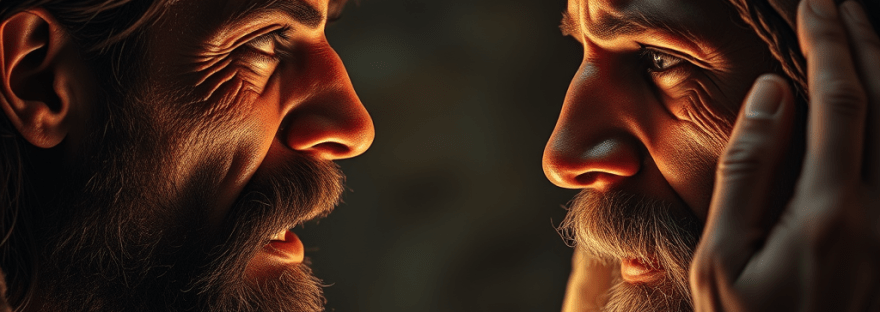
Truth: Of all these facts, only one held any significance: He ran toward Jesus.
Truth: When he ran to the Prince of Peace, with his frightening facts, they were overpowered by the Truth.
Truth: The man’s sanity was restored, and his life changed forever.
Oddly, the story states at this point that the people were afraid. Sadly, when we were delivered from our addiction, some of our friends and family were afraid too. They were afraid it wouldn’t last; afraid it was too good to be true; afraid it was a manipulation technique; or just afraid of being hurt again.
Tetelestai Recovery – Chapter 8, Facts are Changeable
Truth can change the facts but the facts can never change the Truth.
We discovered within the Tetelestai realm of recovery, we were no longer destined to remain stuck in our sickness and disoriented in our dysfunctions. We were painfully aware of the facts concerning statistics, relapse, and case studies. We also knew the facts of our past, our failures, and our crimes.
We could not rely too heavily on these facts however, for if we subjected ourselves to natural results, we would forfeit the opportunity of a supernatural override. If we allowed ourselves to be enclosed by a fence of facts, we would once again fall victim to the old status quo. In agreement with Christ, we declared, “Tetelestai,” against becoming just another statistic.
We looked to the fifth chapter of the gospel of Mark to discover Jesus’ total disregard for facts. In this one chapter, we found three unique and unrelated accounts of individuals who desperately sought to change the facts of their reality. Each case study contained significant details which would negate the likelihood of change. To change an unchangeable fact is outside the realm of reality. We, like the characters in Mark 5, rejected typical reality based solely on facts. We believed that our righteous Judge could and would overrule the facts to establish His trademark justice which is lovingly steeped in mercy.
When we claimed the powerful declaration of Christ, “Tetelestai,” over our sickness, poverty, strained relationships, and criminal records, we were, in essence, asking Jesus to override our human facts in preference to His divine truth concerning our divine purpose and potential.
Tetelestai Recovery – Chapter 8, Facts are Changeable
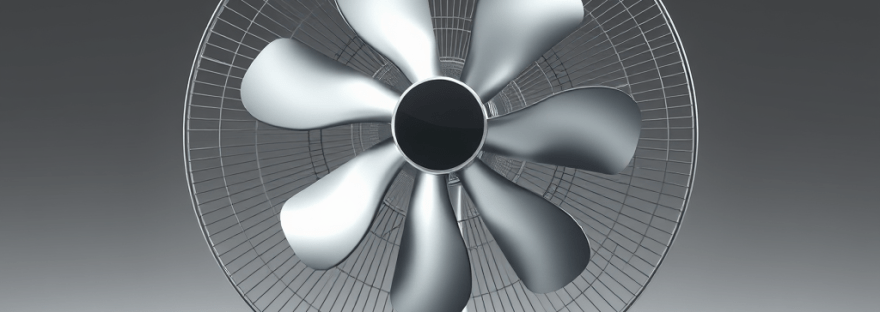
We imagined an electric fan. We could manually spin the blades and create a slight breeze. Obviously, we would have to consistently place our fingertips on the top of the slowing blades to give it another spin. Our entire attention would be devoted to managing the spin of the blades. Our obsession with keeping those blades spinning would consume us, and we would be able to accomplish little else.
If, however, we became willing to plug the fan in to an electrical socket, the blades would spin without effort, in a smooth rhythm, independent of our attention. The effects would be much more noticeable, yet effortless. We could remain active and alert with the more important duties of life, comforted by the breeze of an unseen power.
Faith and doubt, while appearing to be polar opposites, are the alternating currents which work together, generating an absolute belief in Christ. We cannot fully resolve our doubts within our faith. That’s why Jesus tells us time and time again, “Only believe.”
Faith in wholeness, when we felt so broken, was more work than we anticipated.
We worked to believe that somewhere in time, we would possess this shalom which Jesus had bequeathed us before His death.
We worked to believe, when doubts bubbled to the surface after losing our temper, feeling depressed, or experiencing muscle cramps from the lingering effects of the toxins we had used.
We worked to believe our shattered lives could be put back together when legal issues remained unresolved and court cases loomed in our future.
We worked to believe that Jesus’ wholeness could restore us to our original value when we found ourselves faced with the wreckage of our past and the rejection from our families.
We worked to believe in the wholeness of Christ coursing through our veins, restoring the health of mind and body when our inner voice kept telling us we were being foolish and naive.
Finally, we concluded that the only way to test this hypothesis was to presume the words of Jesus were true and choose to believe that they might actually be able to work for us. It seemed worth a shot. After all, we were out of options, so what did we have to lose?


















 Finding Total Recovery in the Words of Christ, "It is Finished!"