When caught up in a moment of testing, we must resist letting our feelings and circumstances serve as a litmus test of our faith. It is not healthy, nor is it accurate.
Tests are for the express purpose of developing patience. Whether the tests come from internal or external forces, they have a purpose. Some of the tests we face are due to our own weaknesses and might easily become our demise, but even then, God always has a better plan. Any test that activates patience is beneficial. Guilt and blame serve no purpose.
Patience tells us that tests are only temporary. Patience tells us that God is doing a good work in us, and He will complete it. Patience tells us not to judge our walk by one random stumble. Patience keeps us steady as we wait for the storm to pass.
It is patience that we lack when we throw up our hands and give up. It is patience that we lack when we question our progress. It is patience that will get us to the finish line. It is patience that will help us be gentle with ourselves.
As we release our addictions with the words of Jesus, “It is finished!” and settle comfortably into our new normal, we feel gratitude beyond words. The dysfunctions we struggled with in the past are fading in the distance. We are on firm footing and making solid progress.
Sometimes we make really good progress and are pleased with the distance we cover in such a short time. We feel that our relationship with God is in great shape, and we are motivated by our sense of accomplishment.
At other times, however, we feel as if we were trudging through mud, putting one foot in front of the other, lacking any drive or inspiration. We feel inadequate, overwhelmed, and disinterested. During these times, we don’t feel so great about our relationship with God. We assume He is disappointed with our lack of energy and enthusiasm.
These times are rare, but they happen often enough to make us question our stability and resolve. We wonder if one of these periods might last so long that we will just give in and give up.
We don’t want to lose what we have gained, and we don’t want to miss the joy of the journey, so the thought of trudging through the marshy swampland of doubt, discouragement, and disagreement feels very threatening.
We love the mountaintops and the flowery meadows, but we must face the fact that dry deserts and muddy bogs are also part of the expedition. We must make peace with both if we want to get where we are going.
When the roads are easy, we feel joy in looking back to see how far we’ve come. When the roads are difficult, we seem to take one step forward, two steps back. Sometimes we slip and fall. Sometimes we just stand still and shrug. Even when we do finally get on firm footing again and start to move forward, we scold ourselves for not being stronger, more resilient, or more determined.
We often have the best of intentions to love wholeheartedly and unconditionally. But our plans can quickly get lost in a swirling sea of resentment, when we suspect our kindness has been mistaken for weakness. We recoil whenever we give an inch only to be met with demands for a mile.
When we pull away from relationships because the emotional cost is too great, we feel like a bad person. We want to follow the leadership of Jesus. We want to be the kind of person who turns the other cheek and goes the extra mile. But being that person takes its toll on our sense of well-being. Our trust turns into suspicion. Our self-sacrifice turns into self-defense and self-preservation. We become discouraged and frustrated. Our personal investments don’t always pay off and it seems pointless to throw any more emotional currency toward relationships that are bankrupting us.
With our emotional center depleted, it is easy to just shut down and go dark. For some of us, the darkness is called depression, and we struggle with thoughts of self-harm. For some of us, the darkness is shoved aside with distractions. We bury ourselves in work, entertainment, shopping, or anything else that will keep us from dealing with our unmet emotional needs.
Our minds were filled with fear, but the fears were not always clearly defined. So, we examined our fears more closely and realized they were rooted in two basic lies.
1. We Were Not Enough
We feared that we weren’t smart or capable enough to maintain our place on this planet. We feared we would not be able to make good enough plans and follow through on them. We feared we would not be able to earn enough money to pay the bills. We feared we could not meet the expectations others had for us, or those we had for ourselves.
We feared that our ‘not-enough-ness’ would be discovered and we would be humiliated. We feared social settings because we were not interesting enough. We feared being forgotten because we just weren’t very remarkable. We feared being abandoned because we just didn’t bring enough to the table.
We feared that we were ill-equipped and woefully inadequate to handle the overwhelming responsibility of life on this planet.
2.We were too much.
We feared that we were too much trouble and not worth the effort. We feared that we were too boring, too impatient, too greedy, too lustful, too resentful, or too lazy.
We feared that we were too insistent on getting our own way. We feared that our sense of entitlement and list of demands were turning us into tyrants.
We feared being alone because sometimes we were too much, even for ourselves.
We noticed that Jesus’ final word tetelestai, translated into the English phrase, it is finished, seemed to imply a sense of giving up. We found this to be an unfortunate language barrier. As it turned out, in the original Greek language of the New Testament, this word tetelestai is a declaration of victory, completion, and success.
Tetelestai is the comment an artist might whisper after completing his final brush stroke on a masterpiece.
Tetelestai is the report a soldier would bring to his commanding officer when a battle was over, and victory had been secured.
We believe our Savior used His final breath on the cross to declare for all time, to all creation, in every dimension, that there is nothing left undone: It is finished; Tetelestai.
There is no more drudgery to sobriety and no more anguish to recovery. There is no self-effort which must be added to what has been declared, Tetelestai.
IT IS FINISHED
In matters of our recovery from substance addiction and the mental dysfunction which accompanied it, we were completely helpless. We had no thoughts that could heal our thoughts. We had no disclosure that could remove our secret shame. We had no detour that would lead us out of the darkness. We were lost. We were alone. We were afraid.
But suddenly, in a random, unexplainable moment, the gift of Tetelestai was revealed. We had run out of options, yet in that barren wasteland of emptiness, we stumbled upon a treasure trove of truth.
“For I know the plans I have for you,” declares the Lord, “plans to prosper you and not to harm you, plans to give you hope and a future.” Jeremiah 29:11
Waiting on God and being certain of His blessings is not pie-in-the-sky or wishful thinking. This faith choice is not presumptuous or improper. Blessings are the divine energy of God empowering us to succeed because we choose to believe in His goodness. He has equipped us with a divine destiny. He wants to see us succeed as much as we do.
And so, we wait for what God has promised, in the same way we might wait at a bus stop, in eager anticipation. We aren’t sitting at some random corner, hoping a bus might drive by. We are positioned at the right place at the right time, waiting for what we know is on its way. We aren’t waiting to see if a hopeful future will appear. We are waiting with confidence, certain of it.
These needs keep us running from one relationship to another; one career path to another; one church to another; one substance to another. We play the blame game, accusing our parents, our partners, or our culture. We know we have unmet emotional needs, so we are naturally drawn toward people and situations that promise to meet them. Of course, it is only a matter of time before they fail us. No human can fully meet our deep emotional needs. It is a painful lesson we have to learn time and time again, until we begin to understand what it means to level up.
We must accept the fact that no human being is equipped to completely fulfill another human being’s emotional, spiritual, and psychological needs. It is just not possible. And it is not their fault.
To level up, we must set aside our petty resentments about how others have failed us. We must admit, we are foolish to think they won’t. They are human too!
From this new perspective, we begin to see Philippians 4:19 much differently. God promises to meet all our needs. Not just physical and spiritual, but emotional as well. So, we must now ask ourselves, “What are some of my emotional needs?”
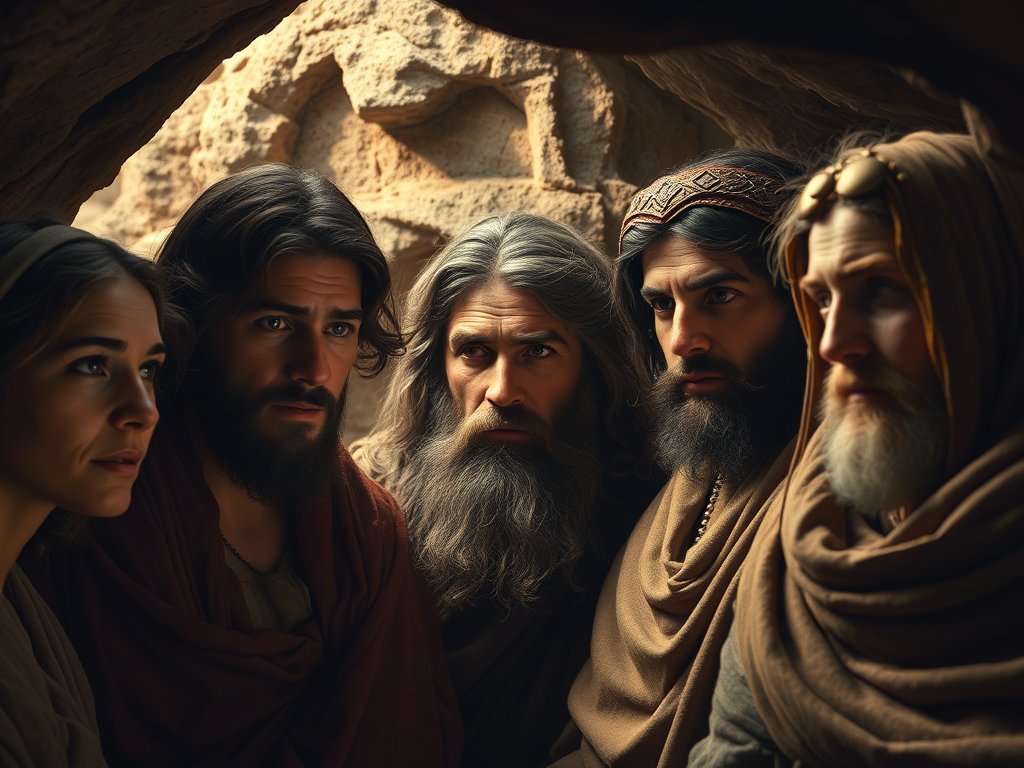
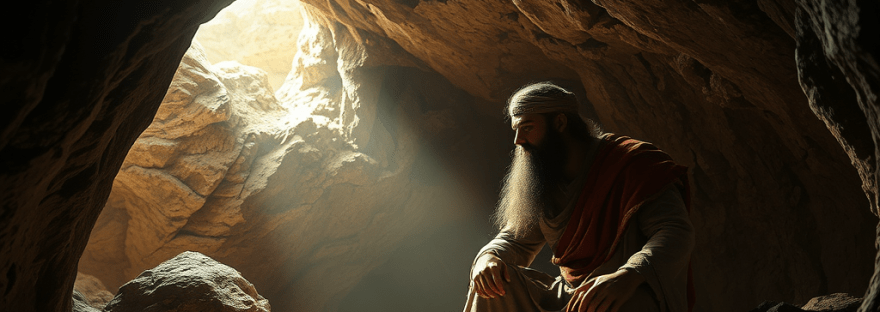
After escaping Crazytown, David finds a cave to hide in, alone (1 Samuel 22). It is a safe place, where he no longer has to answer difficult questions or pretend to be someone he is not. However, his alone time to power down and reboot doesn’t last long. Members of his family hear of his whereabouts and come to join him.
We find that nothing spotlights our dysfunctions quite so vividly as when family shows up to help! Granted, it is a blessing to have family who care enough to show up, but we also know the risk. For those of us, whose tendency is to shut down emotionally when family dynamics are in play, our emotions become glitchy and start to malfunction. We say the wrong thing, blurt out secrets, wear the wrong clothes, belong to the wrong social groups, and vote for the wrong candidate.
It has been said that family is everything. Families can teach us about loyalty, behavior, and self-preservation. They can teach us work ethics and responsibility. Families also teach us how to be manipulative, sarcastic, and selfish. All families have their own layers of drama, chaos, and distrust.
Some families are quite ordinary. Some families are quite extraordinary. All families have dysfunctions, traditions, trauma, and mixed messages.
Family members know too much about each other and the history they all share. Family can push our buttons like no one else. Family can make us feel included or rejected; loved or despised; powerful or weak. Although family dynamics are messy, they are God’s plan for a place to start. Unfortunately, each generation has an ancestry made up of humans, so we all possess some elements of dysfunction within our family code.
_________________
Eventually, David enlists the help of a neighboring king to look after his family so he can heal. We can’t help but notice that this sounds an awful lot like an Al-Anon topic. Family members can be part of the recovery process, but it is not appropriate to become cave dwellers too, just to show their support.
In 1 Samuel 22, we read about David, the would-be king who is making decisions clouded by dysfunction. The story begins with rejection, danger, and drama. David is at risk. He has experienced trauma. He is out of his element, all alone, and without clear direction. His life has come down to a series of geographical moves and his only reason is simple, “I am here because it was not safe there.”
These words ring true for us as well. We have experienced trauma. In response, we run, we tell lies, we act crazy, and in the end, we finally find a cave where we can hide.
We enter our caves carrying something that makes us feel fierce. We carry memories of times when we weren’t so weak. Despite our insecurities and weakness, we also know there is resilience, tenacity, and charisma woven into our DNA by the Creator of the Universe.
In David’s story, he had the sword of Goliath strapped to his side, reminding him of his greatest victory. But, later, after experiencing his own trauma, it seemed his glory days were over. He is hiding in a cave which he refers to as his stronghold. Battling anxiety, depression, and loss, the cave becomes a makeshift fort for David and his absent army. Bringing an abrupt end to his promising career, his entire future has been destroyed by one man. The grief was too much to bear.
The man who once killed a giant with a rock, got hit between the eyes with trauma and it took him to a dark place. Everything changed. Nothing will ever be the same. He is alone. He is unprepared. He is in self-defense mode, and his behavior becomes irrational and unpredictable.
We too have experienced moments of trauma, laying the groundwork for our current dysfunctions. Whether we can remember them or not, each of us has heard, seen, or experienced things that made us feel unsafe, forcing us into unhealthy coping patterns. For some, the trauma was a single event, such as an accident, an illness, or a loss. For others, the trauma came gradually in waves, due to chronic pain, devastating disappointments, years of neglect, indifference, or abuse from a parent or spouse, or the emotional baggage of living in a deeply dysfunctional environment.
Although introspection is important to growth, it is not the main purpose of our spiritual awakening. We are moving into a new position of authority in Christ. We are leveling up. We are no longer human beings having a spiritual awakening. We are awakened spiritual beings affecting the realm of human existence.
Admittedly, human nature can often get in the way, so we frequently ask the Holy Spirit to show us where we need to improve. We ask for help in making the necessary changes. We believe we receive that help and start thanking God for the results even before we see them. We use the words of Christ, “It is finished!” (Tetelestai) to call an end to our obsession over shortcomings and our continual dialogue of negative self-talk.
Empowered by the Spirit of God, and emboldened by the words of Christ, we let go of the things that trip us up. We release our grip on perfectionism. We dismiss the internal committee in our head who sits in judgement of our every motive, thought, behavior, or attitude. We stop auditioning for the lead role and find our proper place in the supporting cast. With the spotlight on Jesus and what He is doing, we take our eyes off ourselves and are relieved of self-consciousness.















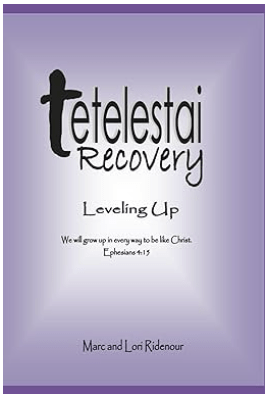
 Finding Total Recovery in the Words of Christ, "It is Finished!"