We noticed something remarkable about the ministry of Jesus. He had no schedule or agenda. His ministry was not directed by Himself, His apostles, or even by God. To our amazement, we realized that the ministry of Christ was determined by people. Without fail, when the slightest flicker of faith sparked, or a request for mercy was whispered, the Savior’s footsteps suddenly stopped.
Tetelestai Recovery / Chapter 8, Facts are Changeable
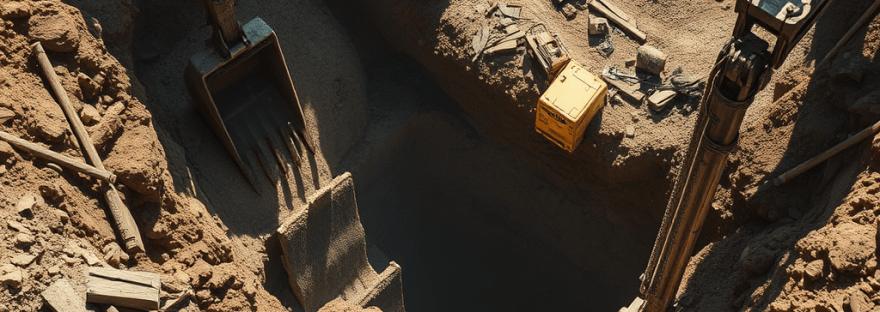
Initially, we feared awakening resentments and regret, but with God at our side, we grew confident that there was nothing we couldn’t face and forgive. As much as we felt our history was set in stone and fossilized forever, we claimed the following Sacred Text over our emotional excavation:
Behold, I am the Lord, the God of all flesh. Is anything too hard for me? Jeremiah 32:27
In time, we became willing to enter our valley of dry bones and speak life over what had been dead for so long.
We found the lifeless remains of enthusiasm, which had been suffocated by disappointment. We found fossils of unfinished projects, which might have been profound, had we not given up. We unearthed splintered fragments of gifts, talents, and abilities which had become casualties of our own sense of inadequacy.
Rather than viewing the carnage as evidence of a wasted life, we began to see it as dry bones coming back to life. By faith, we saw a powerful future rising up from the wreckage of our past.
In our New Normal, we spoke life over anything which reeked of death. In our New Normal, we commanded our dead dreams to rise up in service to our King. We did not think this was too much to expect, for we had been given the resurrection power of Christ. We had been urged to follow in the footsteps of our Creator, who…
Gives life to the dead and calls into existence things that don’t yet exist. Romans 4:17
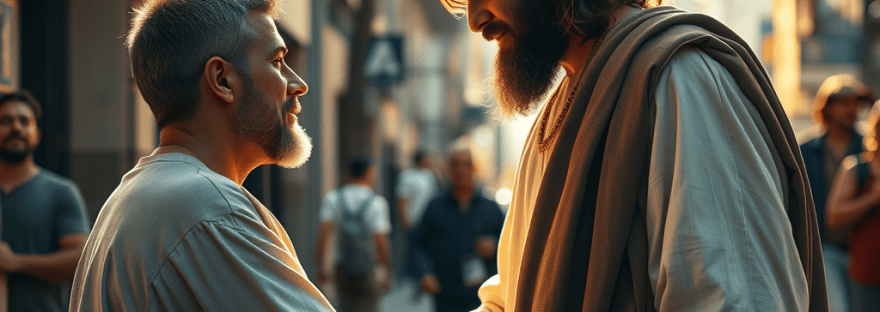
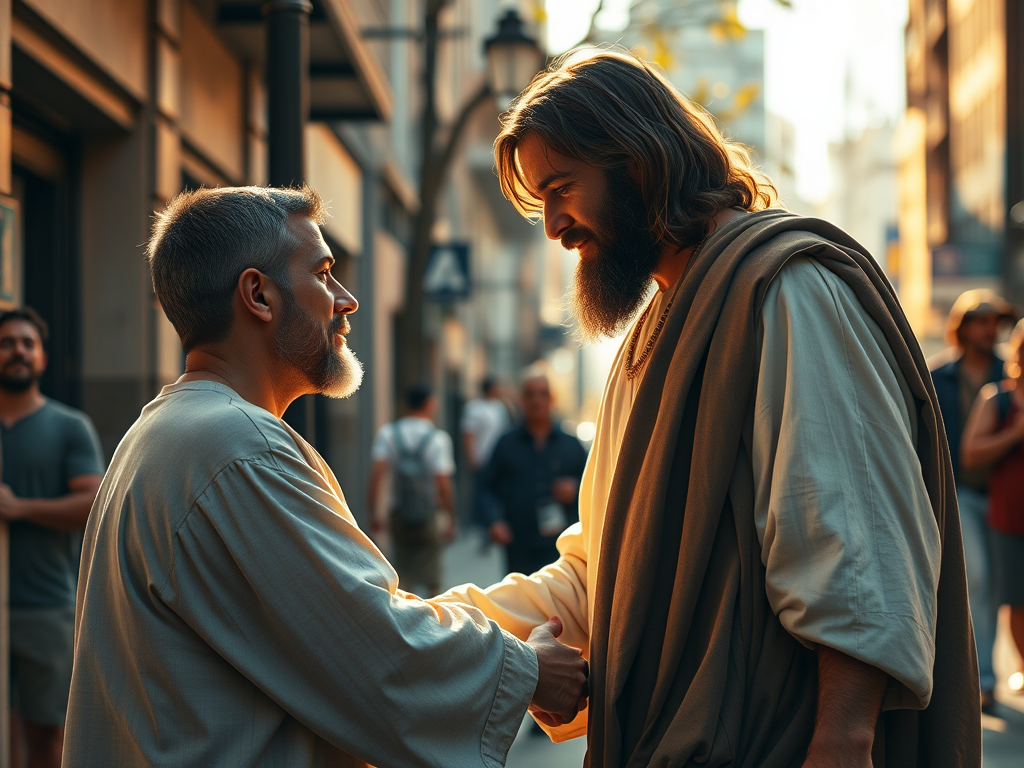
They arrived in Bethsaida. Some people brought a sightless man and begged Jesus to give him a healing touch. Taking him by the hand, he led him out of the village. He put spit in the man’s eyes, laid hands on him, and asked, “Do you see anything?”
He looked up. “I see men. They look like walking trees.” So, Jesus laid hands on his eyes again. The man looked hard and realized that he had recovered perfect sight; saw everything in bright, twenty-twenty focus.
Jesus sent him straight home, telling him, “Don’t enter the village.”
Mark 8:22-26
*************
Like the blind man in this passage, we needed a second touch from Jesus to heal our distorted view. All we had to do was be honest and admit that our perspective was still distorted. Jesus didn’t scold the man for not having enough faith, or for being inadequate. Jesus simply asked him what was wrong and then fixed it.
At the end of the story, after the man’s vision was perfectly restored, Jesus told him to go straight home and not to go back into the village. In our own parallel stories, we heard Jesus say, “Don’t go back into….”
We each heard a different ending to that sentence, based on our own uniquely personal experience. For all of us, it was a moment of truth. If we wanted to enjoy our total Tetelestai Recovery and be comfortable in our New Normal, we would not be able to return to that person, place, or thing which was certain to pull us back into our distortions.
In the original Greek language, the word for the phrase “It is finished”is Tetelestai.
I was introduced to the word Tetelestai one day when I was well into my fourth year of permanent healing from addiction.
It was during a year-long court battle which had been a residual consequence from my old life. The day I appeared in court to hear the verdict and receive my sentence, I claimed this scripture and the word Tetelestai over my case. I was relieved by the peace it held and became willing to accept whatever God had in store for me, even if it meant a year in prison.
I prayed this scripture and acknowledged the fact that God had already redeemed me. He had made me a new creation by healing me from addiction. As I was praying that morning, God was working on the judge. He gave the judge an insight into something that no one else had seen…
As far back as we could remember, we felt different, damaged, and just plain wrong. We did not know exactly what was wrong with us. We only knew that we felt things more intensely than others and we processed our problems with great difficulty.
We obsessively examined ourselves, looking for clues to solve the mystery and to find a key which would unlock some invisible door into normalcy. We noticed people we admired and made feeble attempts to imitate their persona. We sought out damaged friends who would validate us in our dysfunction. We pursued money to prove our worth. We questioned and we blamed. We fought with ourselves and resented God. We learned how to act right, but we didn’t know how to feel right. Eventually it was our feelings which became our undoing.
The presence of unwanted feelings such as insecurity, inadequacy, fear, anger, and other social phobias, coupled with our inability to manage or control them, unleashed within us a desperation for relief at any cost. We soon learned of a temporary reprieve which occurred when our brain chemistry became altered. We didn’t care that the relief would be short lived or cause irreparable damage. The long-awaited relief of rightness, contrasted against the life-long agony of wrongness, offered such an enchanting embrace, we surrendered without a fight.
This book is dedicated to the members of Tetelestai Recovery who meet every Friday evening in the Lansing Correctional Facility.
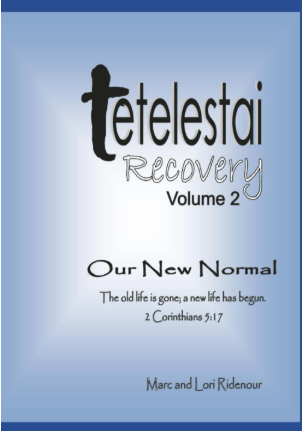
The profound insights and personal experiences shared between inmates and volunteers in this lively discussion group have been the inspiration for this sequel to the original Tetelestai Recovery text published in 2019: Tetelestai Recovery Finding Total Recovery in the Words of Christ, “It is Finished!”
Once our belief system became synchronized with the truth that Jesus could and would heal us, we declared with our Savior, “It is finished!” to skepticism. We stopped questioning our own instability and began relying on His reliability.
Liberated from the boundaries of our own powerlessness, we were finally able to explore a new realm of supernatural power. This power packed a punch and was much stronger than our addictions. It coursed through our character flaws and short-circuited our self-sabotaging configurations.
As we shared this word of deliverance with others and began hearing reports that they too experienced a power surge which supercharged their recovery, our faith was fueled. Enthusiasm for a clean and sober lifestyle grew more vibrant and robust as we watched fellow addicts enjoy the same relief we had been given. We found ourselves energized by the faith of our spiritual siblings.
We discovered strength in their faith when our own faith faltered. When our minds played tricks on us, we connected with those who would remind us:
We have the mind of Christ. I Corinthians 2:16.
When we questioned our own strength, we encouraged one another with:
I can do everything through Christ, who gives me strength. Philippians 4:13
Sadly, we encountered some well-meaning fellow addicts who remained skeptical. They discounted the mindset of healing and deliverance, choosing rather to focus on the power of a progressive disease. The cynics lamented their plight and moaned about their dysfunctions. They were unwilling to grasp the concept of total recovery and argued vehemently, ‘Once an addict, always an addict!” They cautioned us not to tempt fate by using such words as healed or delivered, for it might cause us to lose our resolve and fall helplessly into the abyss of relapse. We were solemnly reminded to continue calling ourselves addicts and alcoholics lest we forget and slip.
We found that these words of unbelief were inadvertently creating a cycle of cynicism which had the potential to rob us of the Word we had begun to believe. We struggled to find clarity and prayed for guidance. We turned to the sacred text gospel stories of Jesus healing the blind, the deaf, and the lame. We noticed these individuals no longer called themselves blind, deaf, or lame after their healing was received. They ran, danced, and praised God. Their healing which was very, very real was also very, very permanent.
However, we had to presume the blind man didn’t stare at the sun just to test the limits of his miraculous eyesight. We read that the crippled man, who heard the word of Jesus and was suddenly able to walk, jumped up. He obviously wouldn’t have chosen to remain on his sickbed, allowing his strengthened muscles to atrophy once again. Quite to the contrary, a person receiving miraculous healing would cherish, protect, and enjoy their newfound wholeness more purposefully than one who had never known a disability.
With this same mindset, we dared not cross the line into recreational drug use or social drinking, as this would be an unconscionable discredit to our healing and deliverance. Our permanent sobriety was a gift of great value. We treasured it as such.
We did not sever friendships or burn bridges. These skeptics were people we loved and valued. We had spent time with them on a regular basis and held deep respect for their journey. We did not disconnect our admiration or loyalty toward them.We simply stopped internalizing their words of skepticism. We chose rather to absorb the words of Christ and other faith-filled believers who would help us maintain the supercharged energy which was vital to powering through those beginning stages of total recovery.
Tetelestai Recovery – Chapter Five – Disconnect From the Skeptics
The upside-down declarations of a fallen world rang out loud and clear:
Trauma causes permanent damage.
Don’t get your hopes up or you will be disappointed.
Nothing gets better; everything is getting worse.
Life will kick you down.
You are growing more weak, frail, and overwhelmed.
The world’s message was abrupt and hopeless: The end result of life is death.
The inauguration of triumph within Christ’s victory cheer, “Tetelestai!” turned these statements right side up. Much like the development of a photograph from negative filmstrip, black became white, white became black, and color emerged, as the world was submerged in the bright red solution of Jesus’ blood.
The law was fulfilled, the curtain was torn, and the New Covenant eliminated the curse, opening the floodgates of blessing for all. The responsibility of the covenant rested solely on the finished work of Jesus. No more sacrifice could outperform the one which announced, “It is finished!” His declaration broke the curse and banished the old covenant of law. Blessings became contingent on Christ’s obedience rather than our own. We found within that realm of grace, the script was flipped, and hope was born.
For forty years, from the time Peter watched his Savior and friend leave this world, airlifted by a fanfare of angels, he had been on a journey of enlightenment. He had become painfully aware of just how upside-down this natural world really was. He had learned, through the power of the Holy Spirit, to walk in a supernatural existence, free from natural limitations. He personally encountered events in which prison led to freedom, death led to life, and sickness led to health. An angel had walked him out of a maximum-security prison. People were raised from the dead on his watch. Some were healed when his shadow passed over them. When Jesus told Peter he would be doing greater miracles that the ones he had seen his Teacher do, He wasn’t exaggerating!
Peter recognized this world for what it was: an upside-down creation waiting to be turned right-side-up. Peter walked upright for many years, against the grain, in an upside-down world where most people just didn’t get it.
We wondered if Peter realized the significance of his choice to die upside-down. From that perspective, looking out on his crowd of accusers, who appeared to be hanging by their feet to a dusty sky, he was given a glimpse of how distorted one’s viewpoint could be, when looking at things upside-down.
When Jesus was spotted by His friends, coming toward the boat, they first thought He was a ghost. He knew what they were thinking. Although they should have been relieved to see Him, they were, in fact, terrified instead. He saw the horror in their eyes and realized they weren’t recognizing Him for who He was.
We recall times when we were unaware that Jesus was approaching, and we became frightened by our own misperceptions. We saw death approaching, but in the end, it proved to be the Author of Life. The disciples thought they were seeing a ghost. And much like those young men, we too become afraid of what He represents. Some fear He will leave them. Others fear He will prohibit their self-expression. Some fear He will demand too much or create too much controversy. Many of us encountered a fear of Jesus, not fully understanding who He was or why He’d come.
Jesus comes to us in different forms. Sometimes He comes in the supernatural realm as an unmistakable tingle of the Great Spirit. Other times He approaches through the Presence of other addicts and inmates whom we fondly refer to as our cell-siblings. Addiction, incarceration, disease, and anxiety were some of the worst storms in our lives, and we were sure some of these issues would be the death of us. Yet, in the midst of these storms, Jesus appeared and offered the opportunity to take a leap of faith and join Him in the supernatural.
In the Sacred Text account, one of the men in the boat, named Peter, asked Jesus to let him come out and walk on the water alongside Him. Jesus of course said, “Sure! Come on out. The water’s fine.” Peter lunged toward the side of the boat as it was rocking and lurching, climbed cautiously over the edge, and slowly lowered his weight onto the swirling liquid. If Jesus was a fraud, the next few seconds would have been the moment of truth. In former miracles, the people who were healed and delivered could have been in cahoots with Him on some elaborate hoax. However, walking on top of water, and inviting another human being to join Him would have been impossible to pull off, had it been a ruse.
The interesting part of this story is when it is taught as an object lesson in some churches, the point always seems to hover over the fact that for a split-second Peter took his eyes off Jesus and began to sink below the surface of the waves. Many preachers belabor the point that Peter lacked faith. We disagree!
There were 11 other men in the boat who didn’t even ask if they could come out onto the water. Peter had faith! Whether he was completely successful in his faith walk or not, he was the only one with the intuition to ask if he could get out of the boat. He was the one who believed in Jesus’ ability to empower him to do it. He knew that in the midst of the storm, the safest place to be was with Jesus. In that moment of clarity, Peter suddenly received a divine revelation. Through this text, we receive the same revelation in our storms. We need not remain powerless and desperate. We are called to function alongside our King, even when natural laws dictate otherwise. Believers can overpower the Natural with the Supernatural.
The power in the spirit realm is faith, and Peter’s faith was increasing exponentially with every risk. His faith account was small, but it was growing. When Jesus asked him “Oh you have such little faith, why did you doubt me?” He was simply letting Peter know that as his faith increased, so would his ability to maintain his position of power in the Spirit realm. Pointing out that Peter had ‘little’ faith was not a reprimand but rather, an encouragement that when his faith grew bigger, it would become more reliable, enabling him to fulfill his call.
This is a word created universe, and we have been given the authority of Christ to create our world with His words. What we believe, we speak, and the manifestation takes place.
Sometimes it is instantaneous, like a light switch. Other times it is a gradual process, like a dimmer switch.
We saw in the passage in Mark 11 that the tree took some time to die. Therefore, we were faced with the challenge to first believe, then speak, and then wait. We noticed that Jesus didn’t stand there waiting for the tree to die. He went on about His business and allowed His words to do the work.
In the same mindset, we learned it was best not to examine our progress, but only to believe and continue on our path. Days, months, and even years later, when encountering humiliating experiences, or running into old acquaintances, we were surprised to see that our emotional responses were no longer rooted in shame, but rather in strength. We found those mountains which loomed in our future had disappeared and our paths were leveled.
As we learned about words creating the world we desire, we understood that our words could destroy our root of shame. Once the root was dead, no one else, including ourselves, would be subjected to the fruit that grew from it.
Those mountains which needed to move would not be moved by exertion or self-effort. We could not uproot our shame any more than we could move a mountain. Both were subject to the same force, the spoken word. Knowing that the only energy that travels from the natural realm to the spiritual realm are our words, we speak to our shame and command it to bear no fruit. We speak to our mountains, and they disappear into the sea.
We declared the words of Jesus, “It is finished!” to our roots of shame and our mountain of amends.
As our mountains dropped into the sea, a tsunami of opportunities flooded into our lives. Wave upon wave of amazing possibilities washed over us.











 Finding Total Recovery in the Words of Christ, "It is Finished!"